Not long ago, we celebrated together the successful breeding season of the Imperial eagle pairs nesting in Arad and Timiș counties. We know of 10 chicks that have left their nests and begun their independent lives. This is exactly what we wanted to achieve when we declared the Imperial eagle the Endangered Species of the Year 2026: to assess the breeding pairs and take measures to ensure the highest possible breeding success.
Now, all we can do is hope that these young birds, as well as the adults, will remain safe. For an Imperial eagle, leaving the nest is only the beginning of a life filled with risks. As they move through their territories, search for food or select sites where they may breed in the future, they can face two of the most serious threats to the species: poisoning and electrocution.
Poisoning
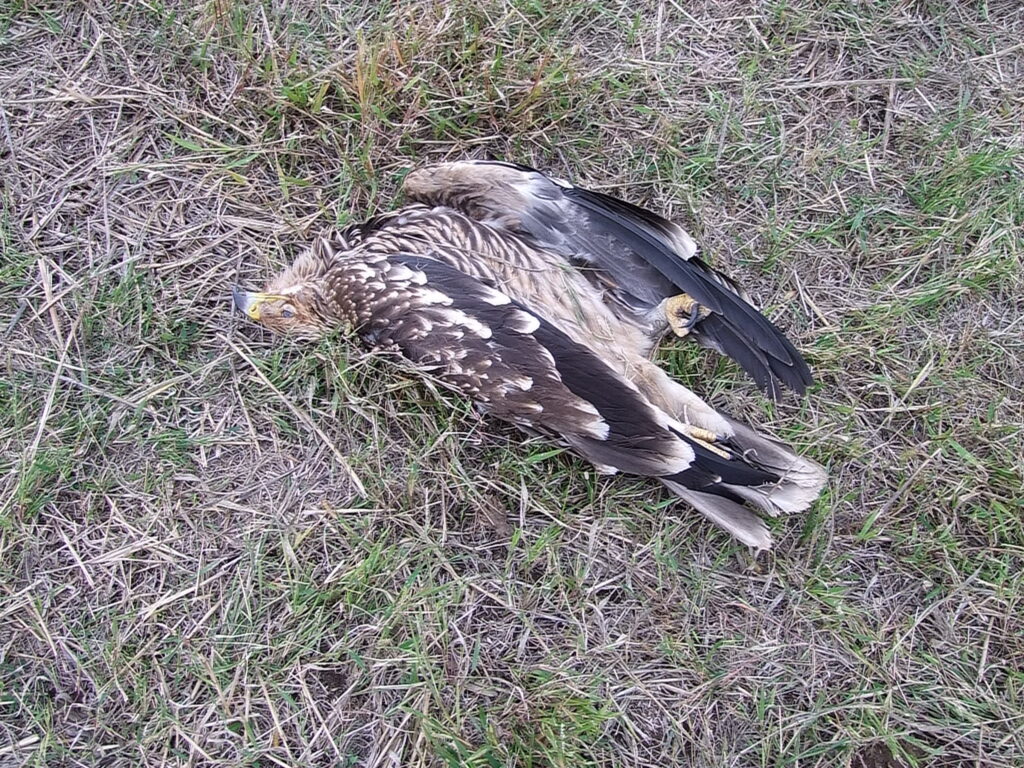
Toxic substances, most often in the form of poisoned baits, are spread to eliminate certain wildlife species, but they frequently affect non-target species as well, including birds and mammals. Once the poison enters an animal’s body, it can cause severe neurological problems and may even result in death.
Take Arad County, for example, where a large proportion of the Eastern Imperial Eagle pairs breed. Over the years, several such cases have been reported in the county, some resulting in mass mortality affecting both mammals and birds. In November 2018, in the Semlac hunting ground, an Imperial eagle was among the numerous wild animals found dead in agricultural fields after consuming food from an area treated with poison to control pests. Less than a month later, in early December, another Imperial eagle died in the same area, from the same cause.
The situation is no better in Bihor County. In 2013, numerous birds died in the area around Salonta as a result of poisoning. Among the birds affected were rare and endangered species, including an Eastern Imperial Eagle. Over the years, we have closely monitored poisoning cases in the area and notified the authorities whenever such incidents were identified.
Electrocution
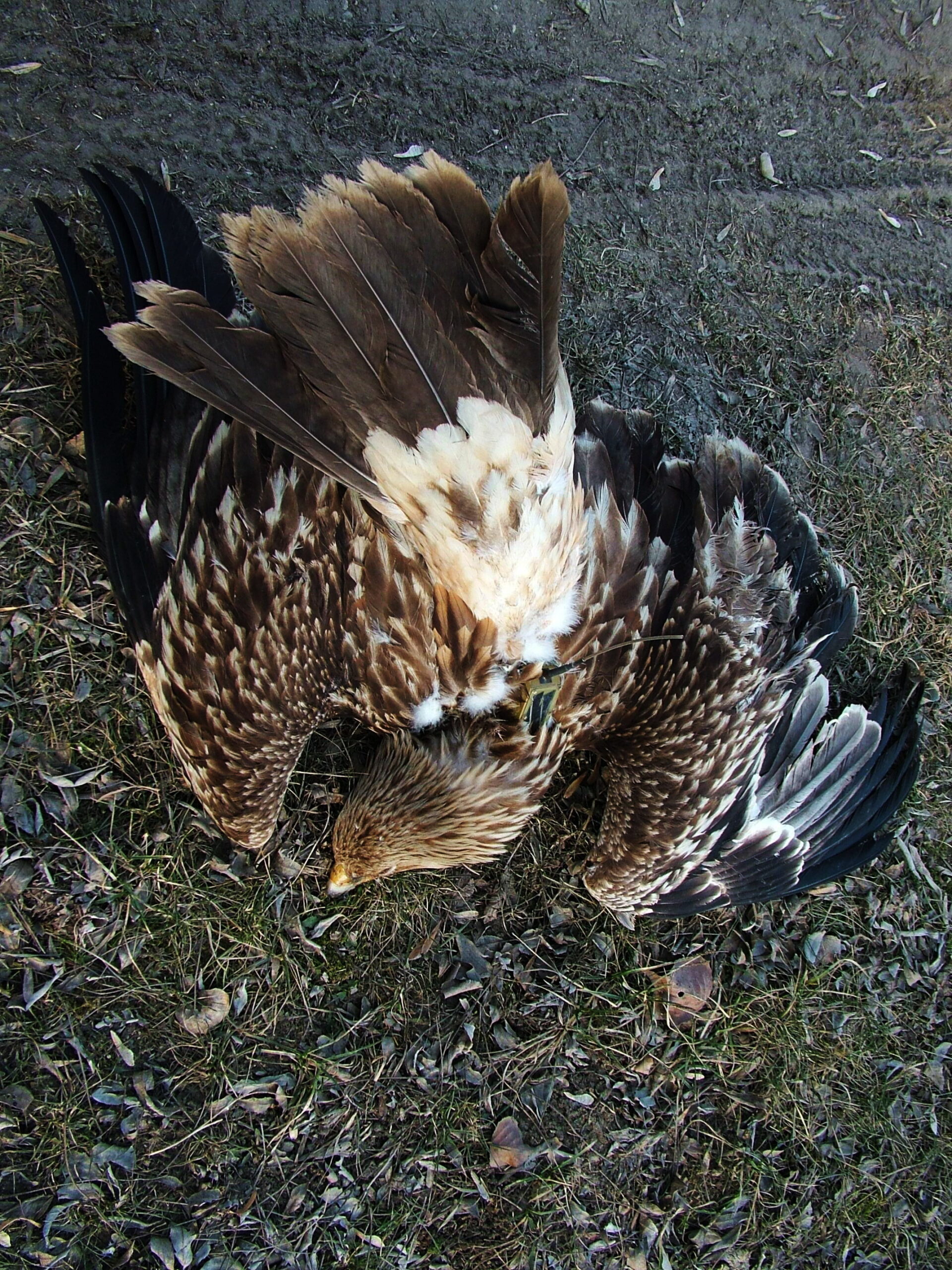
Large birds, such as storks and eagles, are particularly vulnerable to electrocution. The greater a bird’s wingspan, the higher the risk that it will simultaneously touch two wires, or a wire and part of an electrical installation, thereby completing the electrical circuit through its body.
The consequences are devastating and, in most cases, result in the bird’s death.
A study carried out in neighbouring Hungary between 2020 and 2023 documented 93 cases of Eastern Imperial Eagles found dead, injured or ill during the study period. Of these, 17 died as a result of electrocution.
In 2015–2020, as part of a project dedicated to the European roller and in cooperation with ENEL, we managed to insulate more than 1,000 electricity poles across the Western Plain. At the same time, we are aware that these measures have only partially addressed the problem.
Declaring the Imperial eagle the Endangered Species of the Year is only the first step in our efforts to protect the species. We are aware that the necessary changes cannot be achieved in a single year. That is why, together with partners from three other countries, we have submitted a LIFE project aimed at strengthening the breeding population in the Western Plain and connecting the population in the Pannonian region with that of the Balkans.
You too can contribute to the conservation of the Imperial eagle, our Endangered Species of the Year 2026. In November, we will plant trees to provide new nesting sites for this species.