Once every ten years, white storks across Europe are surveyed as part of an international census coordinated by German Nature and Biodiversity Conservation Union (NABU) and carried out in Romania by the Romanian Ornithological Society (SOR) and the Milvus Group. The eighth such census began in 2024 and was completed in 2025.
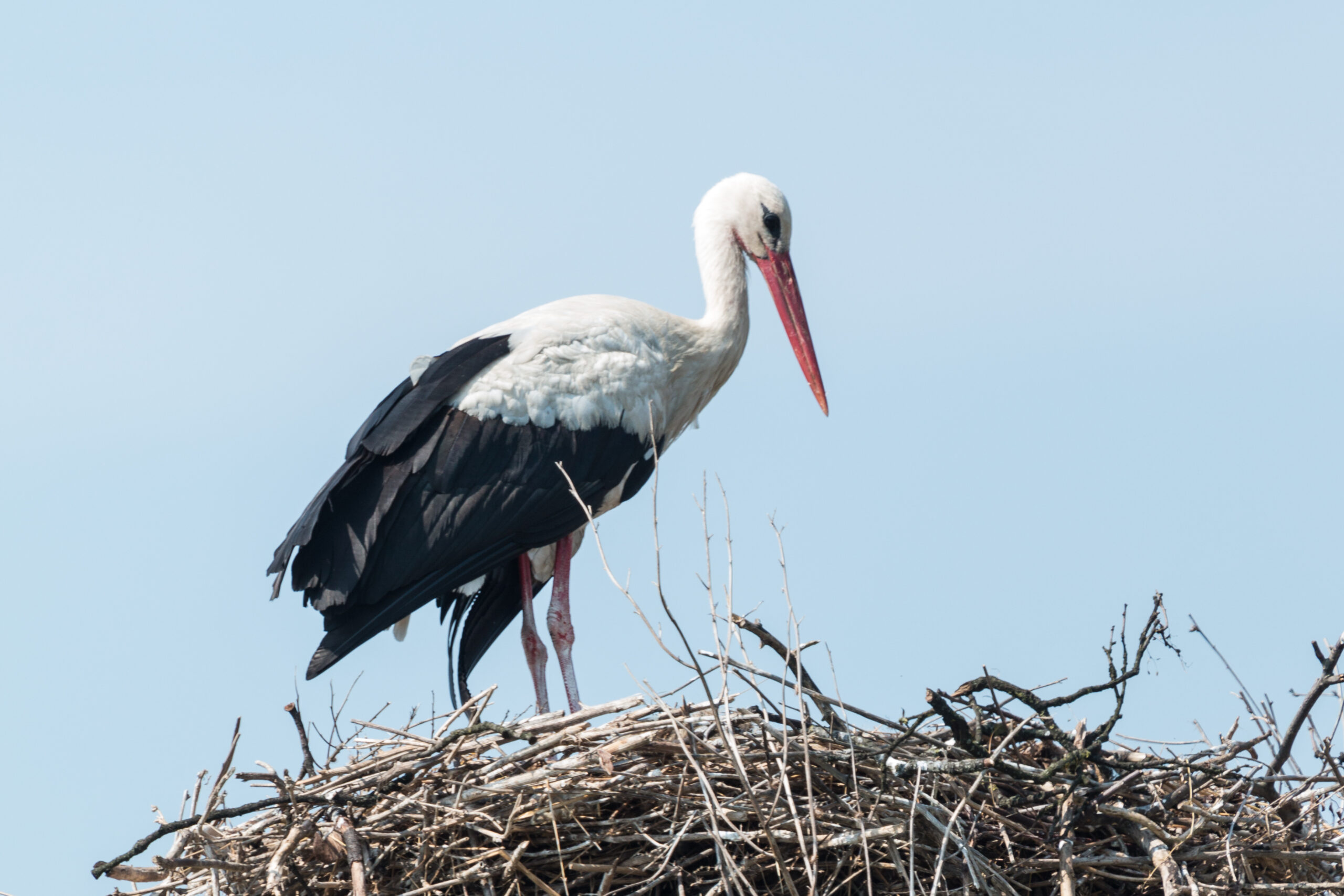
The results tell a fascinating story about biodiversity, community, and the places where nature still feels “at home”.
The numbers that matter
Thanks to the hundreds of volunteers who travelled through towns and villages across Romania, we now have a clearer picture of the white stork population:
- 7,821 nests were recorded in the databases of the two organisations.
- 83% of these (6,509) were occupied by stork families.
- 12,588 chicks were observed in these nests (an average of 1.93 chicks per nest).
- Maximum number of chicks in a single nest: 6.
- The 1,312 nests that were unoccupied during these two years but recorded by our dedicated volunteers were extremely important for estimating the national population of the species.
- While the previous census (2014–2015) recorded 4,374 nests, the efforts of the past two years revealed a much higher number, offering a more accurate picture of the situation on the ground.
The breeding population in Romania, estimated on the basis of data collected during the 2024–2025 Census as well as occasional records gathered in recent years using the Uite Barza! and OpenBirdMaps mobile applications, is estimated at between 9,752 and 12,638 pairs.
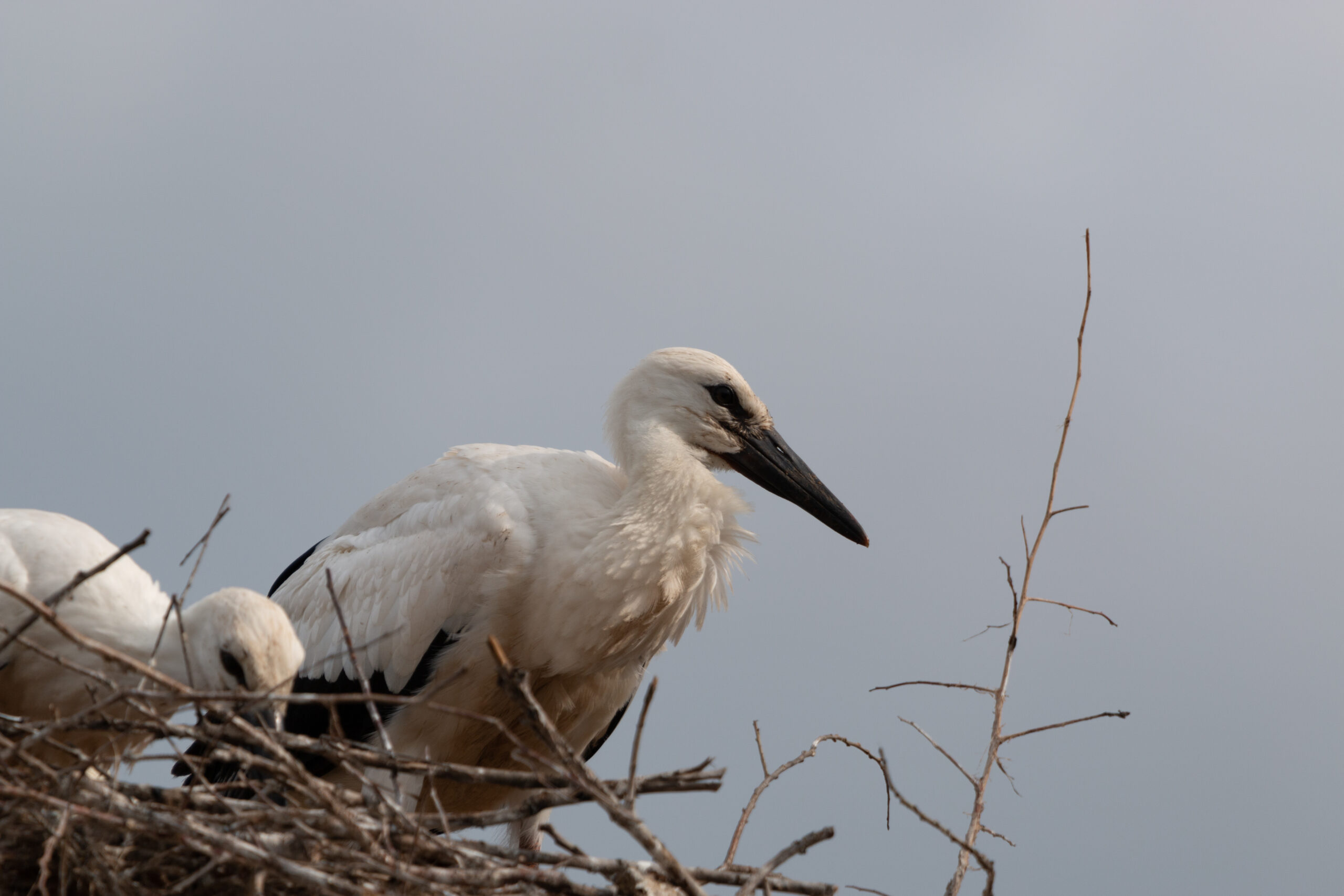
If white storks had a favourite county, it would undoubtedly be Harghita. With a record-breaking 843 nests and nearly 1,800 chicks, Harghita tops the ranking. The village of Joseni is the absolute champion, hosting 126 nests.
The census brought not only figures, but also interesting discoveries:
- Altitude record – 1,115 metres: in the commune of Beliș (Cluj County), a stork family chose to raise its chicks “at altitude”.
- Hidden treasures: in Dolj County, volunteer Răzvan Andrei discovered a rarity – 25 nests built directly in trees along the banks of the Jiu River.
- Geographical humour: did you know that in the commune of Bârza (Olt County) there is officially just one… stork nest?
Although volunteers surveyed white storks in almost 40% of the country’s localities, there are still places where hidden treasures may await discovery, particularly in Galați, Mehedinți, Vâlcea, Buzău and Maramureș counties.
The stories behind the numbers
Beyond the data entered into the UiteBarza! and OpenBirdMaps applications, this project is also about the volunteers.
Luca, the youngest census taker, travelled the roads of Ilfov alongside his parents. What began as a logistical challenge soon turned into pure enthusiasm when local residents – some over 70 years old – waited for him at their gates, proudly showing him “their storks”.
For Dora, the census provided an opportunity to return to Țara Călatei (Cluj County). Among nests and picturesque landscapes, she rediscovered the village of her summer holidays, offering her own child a lesson about time, nature and patience.
“All it takes is a bit of time and planning – and the results and satisfaction will soon follow,” says Raluca, one of the most dedicated volunteers, who together with Cristian recorded over 1,500 nests in just the first year of the census.
Corina walked through the commune of Mănăstirea Humorului, covering 25 kilometres on foot in a single day in search of stork nests. Upon reaching a hilltop, she was rewarded with breathtaking views and the sight of a pair of common buzzards performing their nuptial flight.
“Thank you for the honour of being part of your team searching for stork nests. I had a wonderful time; it felt like a holiday for me and my husband,” says Ramona, a volunteer from Dolj County.
These data do not remain only in our databases. They help us identify areas where storks need additional protection and better understand how habitat changes affect them. The final results at European level will be compiled and published by NABU.
We thank the more than 400 volunteers who dedicated their time to protecting this bird!