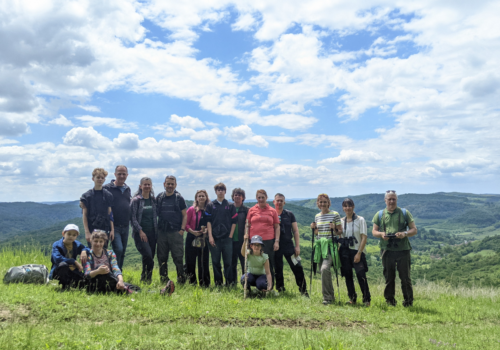
The Milvus Group Association for the Protection of Birds and Nature is continuing its study of bird migration on Chituc Spit in 2026, one of the most important locations in Romania for monitoring migratory birds.
With the start of this year’s ringing activities, we are also launching a dedicated webpage where the public can follow the progress of migration almost in real time: the number of birds caught each day, data on each species caught, and important events from life at the camp. The camp’s daily results for 2026 can be followed here.
More than 170,000 birds monitored over the past 12 years
The first bird-ringing camps for migratory birds on Chituc Spit were organised by the Milvus Group Association in 1996 and 1997. After a 17-year break, we resumed ringing activities, and since 2014, autumn migration has been monitored every year.
Between 2014 and 2025, we ringed 170,615 birds belonging to 189 species. Together with the 9,340 birds ringed in 1996 and 1997, the total number of birds marked on Chituc Spit reaches almost 180,000 individuals.
The most numerous species caught between 2014 and 2025 were the European robin (Erithacus rubecula) – 16,625 individuals, the Red-breasted flycatcher (Ficedula parva) – 15,927, the Sedge warbler (Acrocephalus schoenobaenus) – 14,943, the Eurasian blue tit (Cyanistes caeruleus) – 14,122, and the Willow warbler (Phylloscopus trochilus) – 10,549.
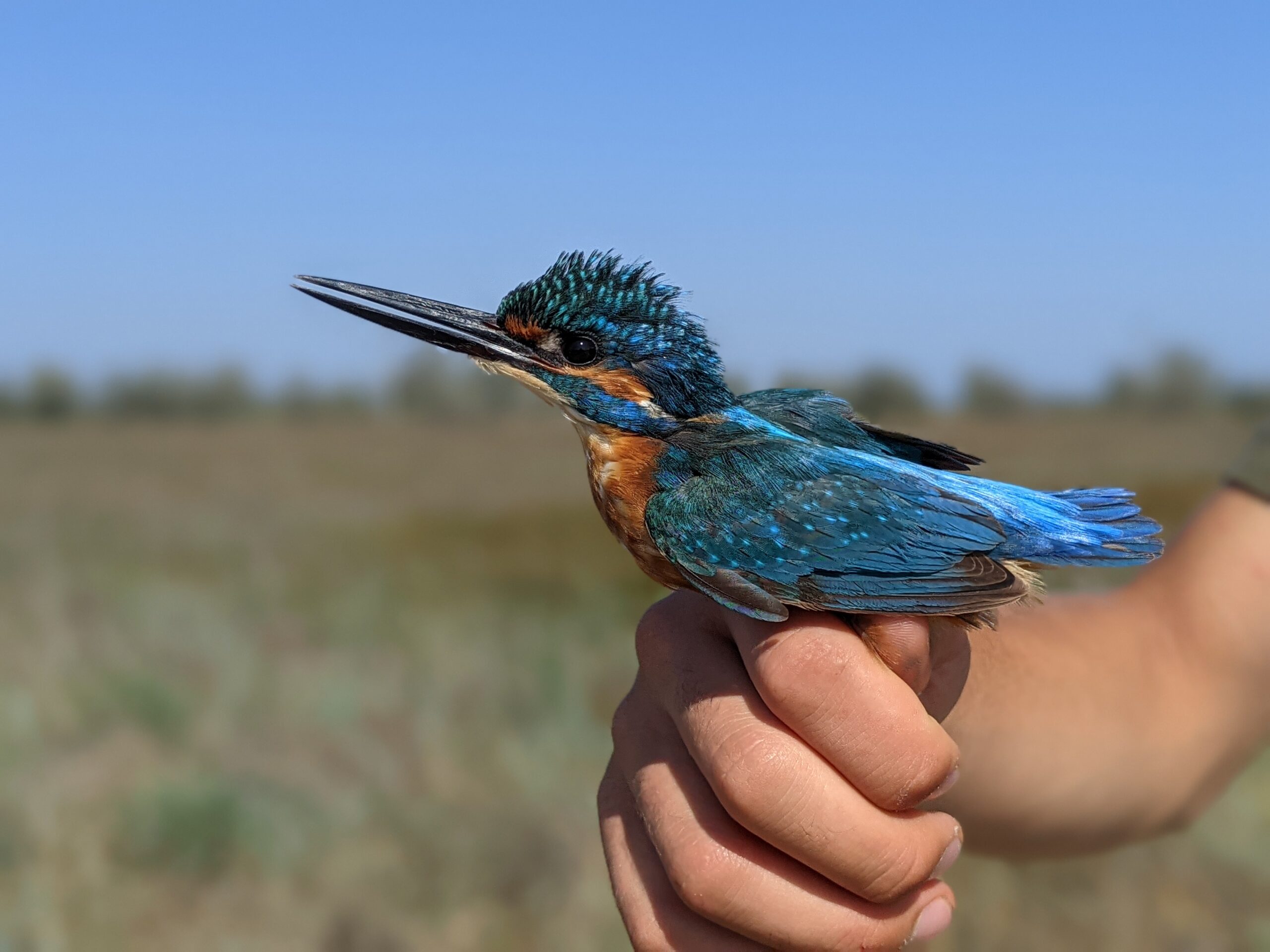
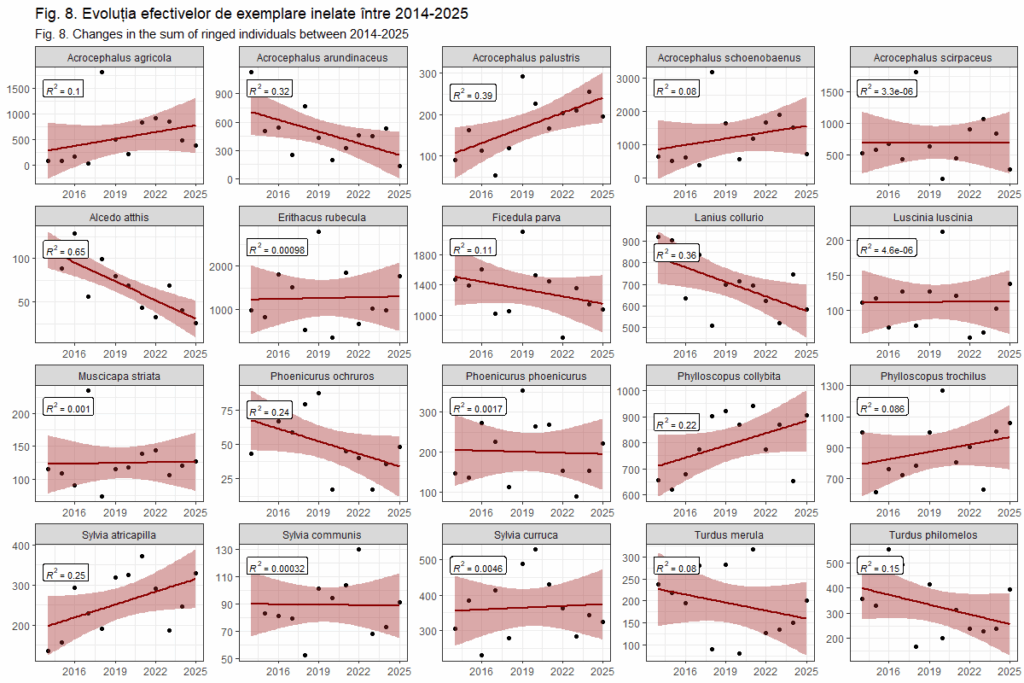
Our study examines the long-term effects of climate change on bird migration and changes in the population sizes of migratory species. The results indicate declining populations for some species, such as the Common kingfisher (Alcedo atthis), the Red-backed shrike (Lanius collurio) and the Song thrush (Turdus philomelos), while for others, such as the Marsh warbler (Acrocephalus palustris), the data show an increasing trend.
Birds ringed by us cross Europe and reach Africa
Ringing provides information not only about the number of birds passing through Chituc. When marked birds are recaptured or observed in other countries, we can learn about their migration routes. Between 2014 and 2025, 39 birds ringed on Chituc Spit were found outside Romania, while 16 birds ringed in other countries were subsequently recaptured or observed on Chituc.

One of the most impressive movements documented involved a Spotted flycatcher (Muscicapa striata) ringed on Chituc in 2019 and found dead approximately 7,500 km away, in Pretoria, South Africa. This is the most distant recovery of a bird ringed by us.
Chituc, a place full of surprises
Alongside common species, the camp has become an important location for documenting rare species in recent years. Between 2014 and 2025, thanks to our ringing activities, we added seven new species to Romania’s bird list, including the Bonelli’s warbler (Phylloscopus nitidus), the Red-flanked bluetail (Tarsiger cyanurus), the Western Bonelli’s warbler (Phylloscopus bonelli), the Siberian accentor (Prunella montanella), the Yellow-browed warbler (Phylloscopus schwarzi) and the Ovenbird (Seiurus aurocapillus). Including the first editions in 1996 and 1997, the ringing camp has contributed ten new species to Romania’s bird list.
Follow migration with us
Starting in 2026, we want to make the results of our research more accessible to the public. The new webpage will allow anyone to follow the progress of migration throughout the season and see how the number and diversity of birds change from one day to the next. By publishing daily data, our work becomes more transparent and easier to follow not only for researchers and ornithologists, but also for nature enthusiasts, volunteers, teachers, pupils and anyone interested in bird migration.
Long-term monitoring is essential for understanding the changes affecting migratory bird populations. The data collected at Chituc already provide one of the most consistent datasets on the migration of songbirds in this region of Europe and can contribute to a clearer picture of the dynamics of migratory populations.