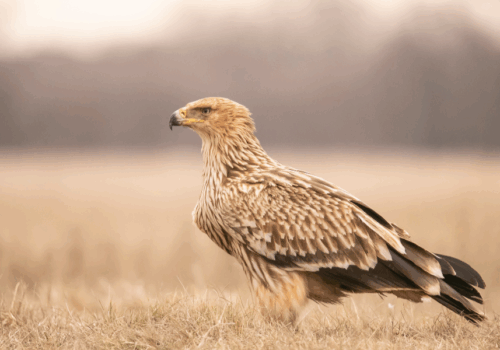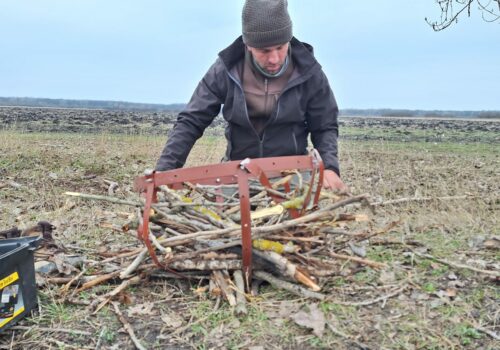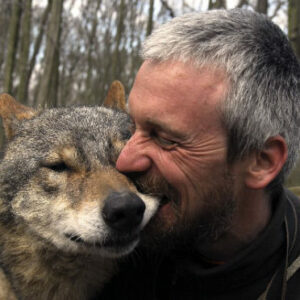
At the end of 2025, we decided that the Imperial eagle would be the Endangered Species of the Year 2026, a species about which we still had relatively little information. We knew that the number of breeding pairs in the country was extremely low. But that does not mean the species only came onto our radar this year.
It all began a decade ago, on 25 March 2016, when our colleagues found a relatively large nest in Arad County, built in a false acacia tree and occupied by a pair of Imperial eagles. It was a historic moment: this was the first nest identified in Romania after 45 years during which no nest of the species was known.
In July that same year, we marked another historic moment. The first two Imperial eagle chicks from the Arad Plain were ringed, and one of them was fitted with a transmitter. This chick was named Bandi, in memory of the late ornithologist Libus András, who was born in Pecica and played an important role in surveying and monitoring the birdlife of the Mureș floodplain.
This is how Bandi’s story began and, at the same time, we gained our first insights into the movements of an Imperial eagle born in Romania.
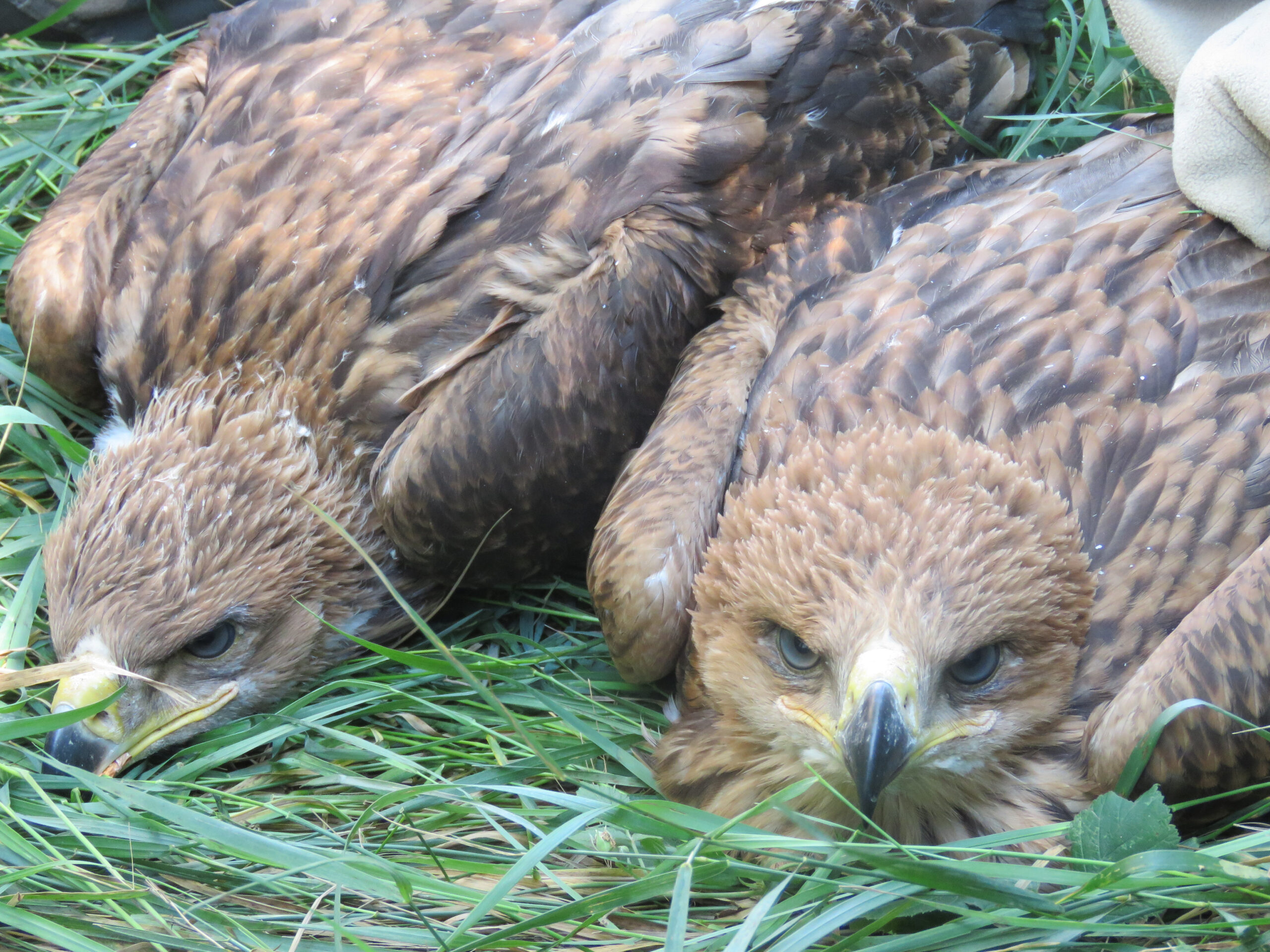
During his first few months, Bandi spent much of his time in Hungary, before crossing the Apuseni Mountains and returning to Arad County through southern Banat and Vojvodina in Serbia. Another trip to Hungary followed, then a longer journey towards the Danube, taking him as far as north-eastern Croatia.
And there were many more adventures to come. By December 2025, Bandi had travelled more than 107,000 km and visited seven countries: Romania, Hungary, Serbia, Moldova, Ukraine, Slovakia and Croatia.
In December 2025, however, Bandi’s transmitter stopped sending data, and we have not received any further data from him since then. We do not know what happened. It is possible that the transmitter is no longer working, and the lack of a signal does not necessarily mean that anything has happened to Bandi.
Although we no longer receive signals from Bandi, the data collected over the years have given us an extraordinary insight into his life. Thanks to his transmitter, we have learned a great deal about Bandi’s movements, important habitats for the species, the distances he travels, and the places where he rests and feeds. The data have given us an unprecedented insight into how an Imperial eagle uses the landscape and how its movements change throughout the year.
One of the most important discoveries came in 2020, when Bandi started breeding just 15 km from the place where he hatched.
Bandi’s story has shown us how much we can learn about a species by following the journey of a single individual. Above all, it has shown us how important it is to understand and protect the places these birds depend on.
That is why, in November, we plan to plant trees that, over time, could provide suitable nesting sites for Imperial eagles and contribute to creating new habitats adequate for the species.
Join us in this effort and help us protect this endangered species.