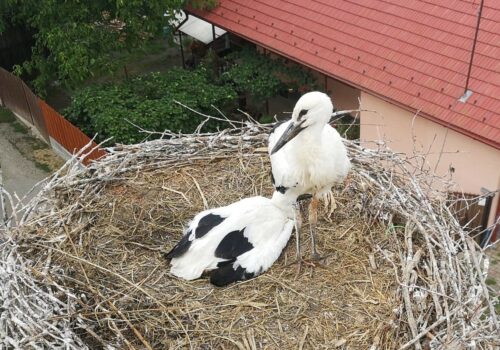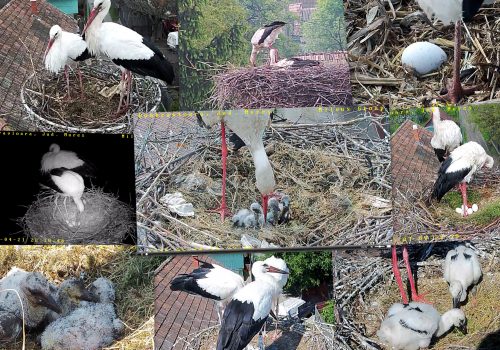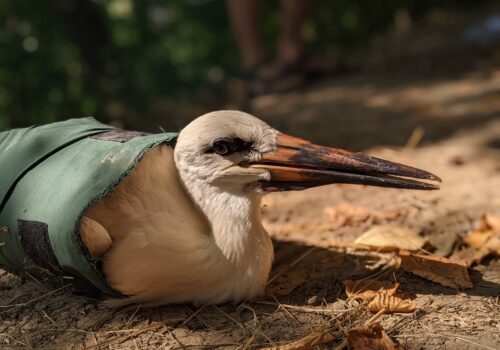
In one of the stork nests we monitor in Dumbrăvioara (Mureș County), the chicks have perished, and we have received reports that similar cases have occurred in other nests as well.
Why stork chicks may die
- Weather extremes are beyond our control Cold, wet springs are among the most lethal factors for stork chicks, especially in their first 10–20 days. Hypothermia and weakened immunity make survival difficult, even with attentive parents.
- Not all chicks are meant to survive In the wild, storks often lay more eggs than they can raise, and some chicks naturally perish when food is scarce. This is an evolutionary strategy — ensuring that at least some young survive in good years.
- Parental behavior is adapted for survival What might seem cruel — like removing or abandoning a chick — is sometimes the adult birds’ instinctive response to conserve energy and resources for the strongest offspring.
What do we know from the researches done
Rainy conditions not only cause hypothermia but also increase the risk of fungal infections. A German study found that 44.6% of examined dead chicks under 23 days old had fungal pneumonia, primarily caused by Aspergillus fumigatus. Wet nest environments likely promote the growth of such pathogens.
Another research done in Poland concluded that the effects of air temperature and precipitation indirectly modify potential food resources available to storks, such as insects, amphibians, small mammals, etc.. Reduced food availability causes starvation of chicks or hampers their growth, and chilling may make them more susceptible to mortality.
Why is it not good to intervene
- Severe weather conditions (such as rain, cold, strong winds, drought, etc.) induced mortality is part of natural selection. Harsh weather disproportionately affects weaker or less fit chicks, which helps ensure that only the strongest individuals survive.
- Our core conservation principle is not to intervene in natural processes — no matter how painful they may be. The white stork is not a species threatened with extinction, and although the loss of chicks is heartbreaking, it does not threaten the survival of the species.