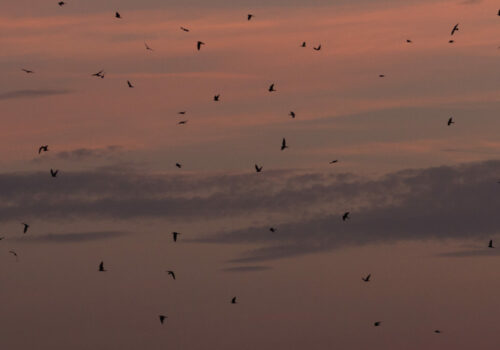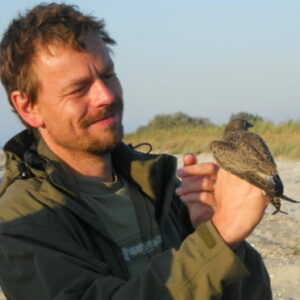
Over the years, we have paid particular attention to increasing the population of the Red-footed falcon (Falco vespertinus), as this species is listed as Vulnerable on the IUCN Red List. Within the framework of an international project implemented between 2006-2009, in Crișana and in Banat, we have installed several hundred artificial nest boxes, which has led to a significant increase in the species’ population.
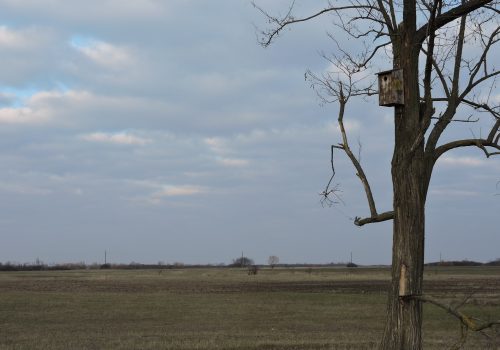
In 2024, in the commune of Roșiori (Bihor County), we installed 20 metal nest boxes and 10 wooden ones. Our aim was to determine which of the two types of nest boxes would be preferred by falcons. Experience has shown that, due to rainfall and the organic material left behind by the birds, the wooden boxes deteriorate much more quickly. Therefore, metal boxes may represent a more sustainable solution – but only if they provide suitable breeding conditions for the target species.


In both 2024 and 2025, we visited the falcon colony several times. In April, we carried out the usual cleaning and preparation of the boxes for the breeding season; in May, we recorded their occupancy; and in June, we monitored breeding success.


During our inspections, we identified several design and construction flaws, which we attempted to correct in order to improve breeding conditions for the falcons.
After two years of trials, we reached the following conclusions:
- Although there is still limited data regarding the Red-footed falcon, the large number of Common kestrels (Falco tinnunculus) breeding in the boxes suggests that they readily use metal boxes.
- Jackdaws tend to prefer the smaller wooden boxes, whereas the more spacious metal boxes are more advantageous for Common kestrels, as they rear more chicks and kestrel chicks are bigger than the red-footed falcon chicks.
- In 2025, all 21 identified Common kestrel breeding attempts were successful, raising at least 91 chicks in total (an average of 4.3 chicks per pair).
- After the trial the existing wooden boxes will be relocated to colonies where Red-footed falcons occur in higher numbers. The metal boxes will be inspected again in the spring of 2026, when maintenance work will also be carried out.
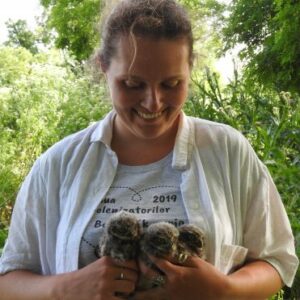
An interesting fact: this year 5 saved Common kestrel chicks were “adopted” by the kestrel families which nest in this colony.
This research was possible thanks to the work of our colleagues Attila Nagy and Lőrinc Bőrbos, as well as Ana-Daniela Ciocan (volunteer) and ERASMUS volunteers from Spain.