Electrocution is one of the most serious threats to birds of prey and many other species that use high- or medium-voltage poles as resting or observation points.
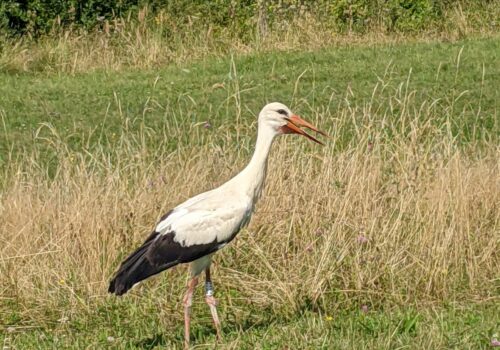
Large species, such as the Peregrine falcon or the White stork, are particularly at risk because their wingspan allows them to easily reach the dangerous parts of electrical installations.
Most cases of electrocution end tragically, but occasionally some birds survive and come into our care.
This was the case with a Peregrine falcon brought to the Vets4Wild Association, from Turda at the beginning of September. The bird showed clear signs of electrocution: a wound on one wing and another on the opposite leg. Although surgery was necessary, the bird was too weak initially and required a few days of recovery before it could undergo the operation, during which three of its toes were amputated.
The falcon spent a few more days recovering at the veterinary clinic, after which it was transferred to the enclosures of the Wildlife Rehabilitation Centre, where it continued to receive antibiotics for 10 days to prevent infection.
After a month at the centre, its condition is good: it is eating well, the post-operative wounds are healing properly, but it is checked by a veterinarian every three days when its bandage is changed.
Since the Peregrine falcon catches its prey in flight, diving upon smaller birds, and it has only one toe remaining on one of its legs, its chances of surviving in the wild are uncertain. To assess its ability to catch prey, the falcon will be given live food, and we will observe how it manages.
**Both the Milvus Group and the Vets4Wild Association are involved in the rehabilitation of injured animals on a voluntary basis, without any state funding.