Although last year experts recorded a record number of Red-footed falcons during the traditional international Pannonian synchronised counts, which have been taking place for almost 20 years, fewer falcons than in previous years were observed in the lowland regions of western Romania in autumn 2025. Unfortunately, the same pattern emerged again this year.
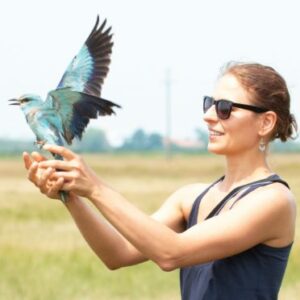
As is well known, the Red-footed falcon, a small species of falcon, is highly sociable not only during the breeding season but also while migrating. Every year, from late summer into autumn (usually from the second half of August until the end of September, and occasionally into early October), hundreds, sometimes even more than a thousand falcons gather at specific locations in the evenings to roost together. These regularly used roost sites are usually groups of trees in open lowland areas or lines of trees along roadsides, to which the birds return year after year.
Observations of ringed birds, together with tracking data from tagged individuals, show that Red-footed falcons can change their roost site even between two consecutive evenings. To obtain the most accurate possible estimate of the red-footed falcon population gathering in the Carpathian Basin, and to avoid counting the same individuals more than once, weekly counts at autumn roost sites are coordinated across the entire region, from Slovakia to Vojvodina, and carried out on the same day. This is known as a synchronised count. Through this international cooperation, experts can monitor week by week how the number of red-footed falcons gathering at known roost sites changes over time.
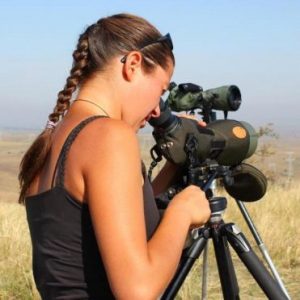
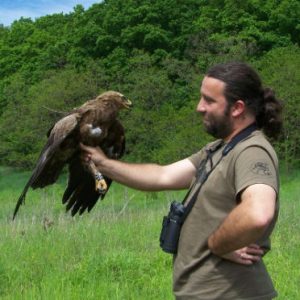
This year, Milvus Group staff and volunteers once again visited the six known roost sites that we have been monitoring for many years. However, only one of these sites performed as expected, attracting the large numbers typically recorded there. At another site in southern Banat, which usually attracts large gatherings of falcons, birds did gather, but their numbers were considerably lower than usual. Moreover, during the second half of September, which is normally the peak period at this site, the number of falcons began to decline.
At the other four known sites, either no gatherings took place at all this autumn, or we counted just 10–20 individuals, most likely belonging to the local breeding populations. These birds gradually dispersed from the sites as early as the beginning of the monitoring period.
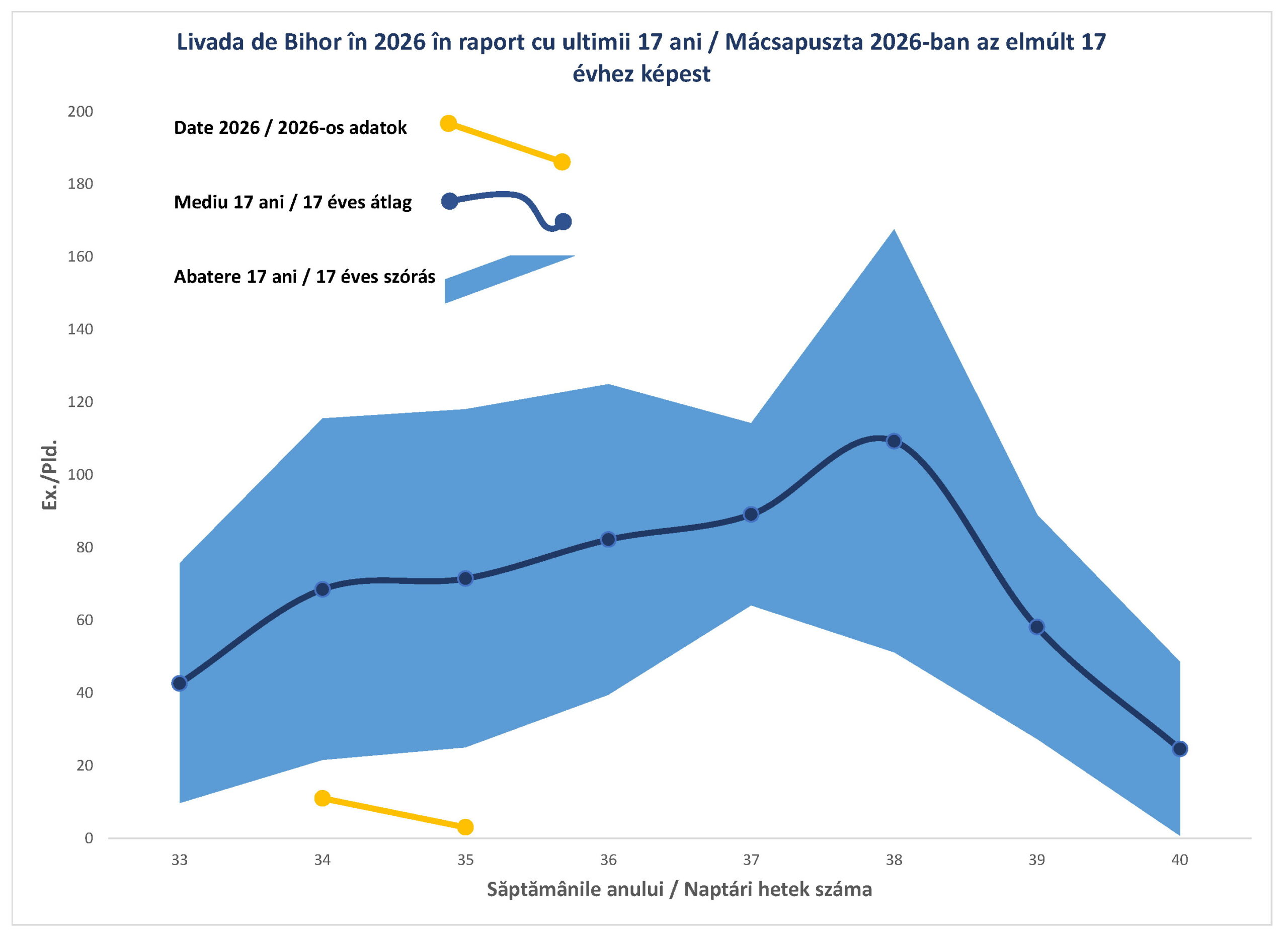
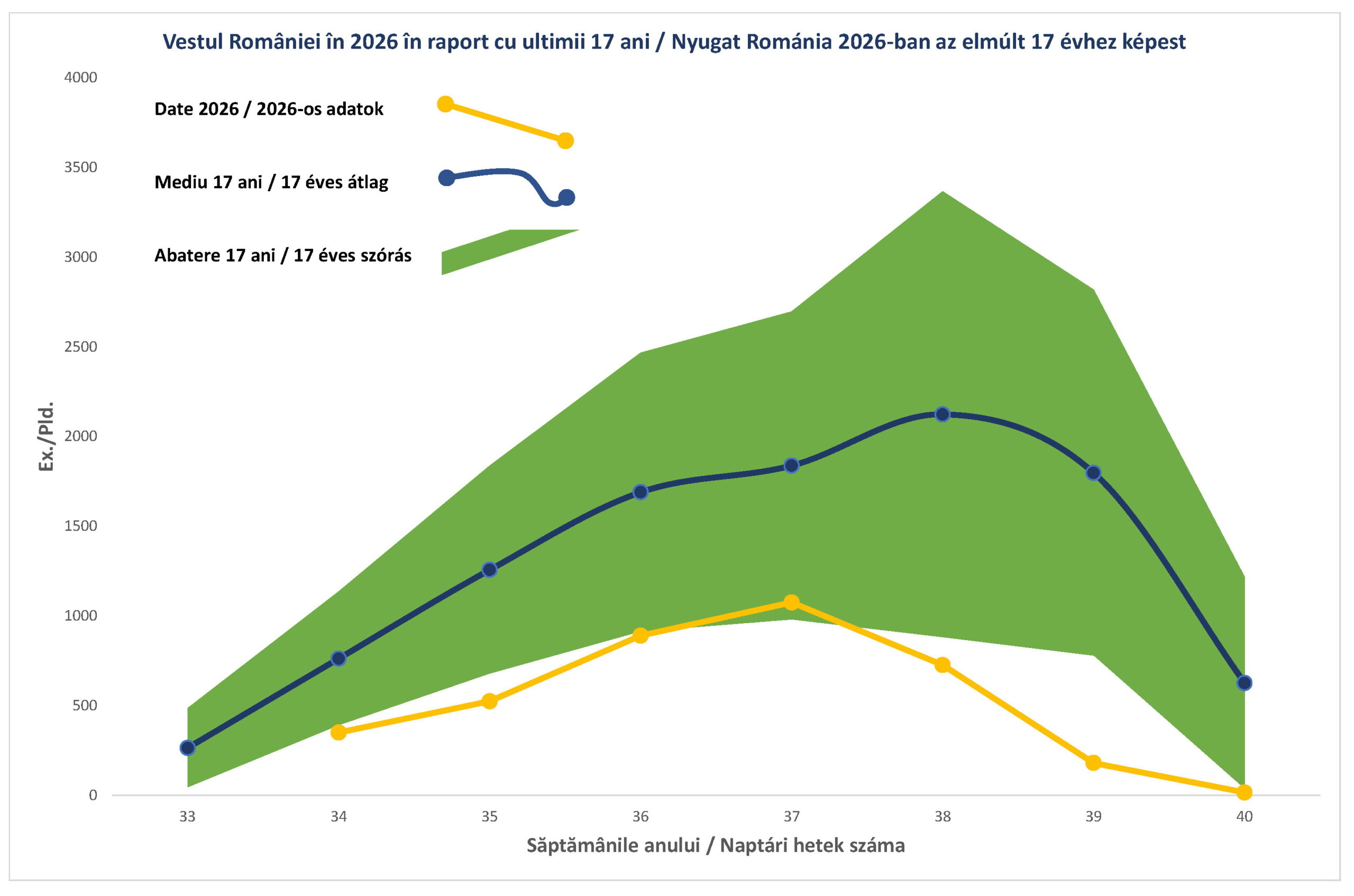
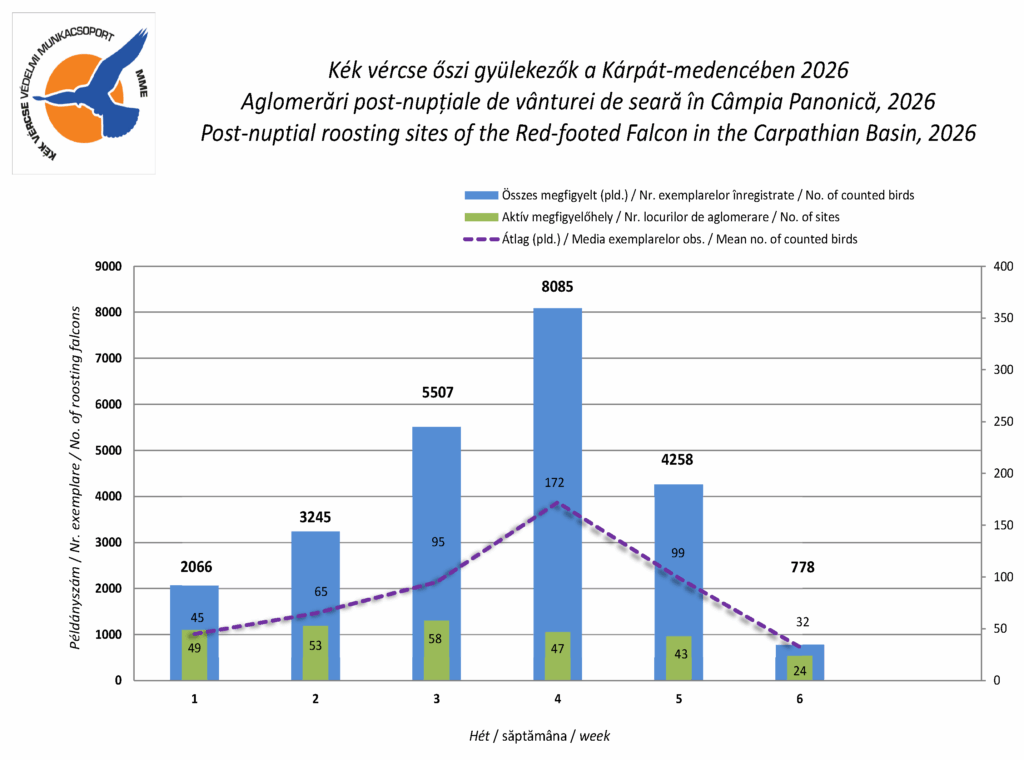
However, numbers of red-footed falcons were lower in 2026 not only in Romania, but also in the neighbouring southern Hungarian lowlands. Compared with last year’s record, when the weekly peak stood at around 18,000 birds, considerably fewer were counted across the Carpathian Basin this year: just around 8,000 during the week with the highest recorded numbers.
As for the now largely deserted roost sites in western Romania, we naturally also considered the possibility that the birds had moved elsewhere to spend the night. To investigate this, we made two trips to the Banat region in early September. On both occasions, we discovered a new roost site, but both were on the Serbian side, in Vojvodina, very close to the Serbian-Romanian border.
We believe there may be two reasons for this. Firstly, habitats close to the Schengen border are less disturbed than those in other areas, partly because there is little cross-border traffic and partly due to stricter border controls. Secondly, Vojvodina has considerably more groups of trees suitable for large communal roosts of Red-footed falcons than the Romanian side, where suitable trees are critically scarce. Moreover, due to this year’s drought, the reduced foliage in some areas provided less cover for birds seeking a safe place to roost.
It is possible that, after following the same approach for many years, we will need to change our strategy next year and put greater emphasis on searching for potential alternative roost sites. We will certainly do our best!
We would also like to thank everyone involved in this year’s counts – surveyors, volunteers and staff alike – for their hard work!