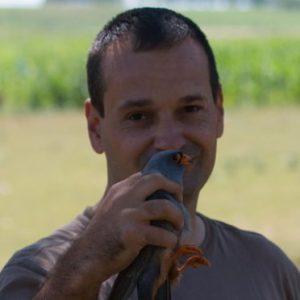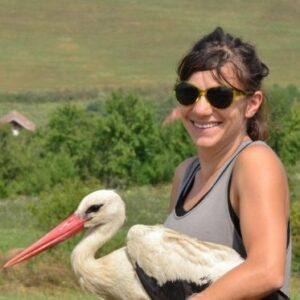
In addition to running annual monitoring programmes, rehabilitating injured wild animals and carrying out numerous environmental education activities, we also place emphasis on conservation programmes for endangered species.
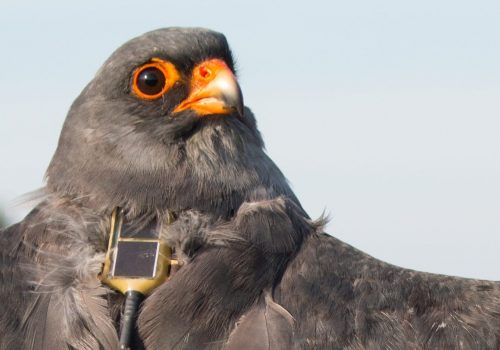
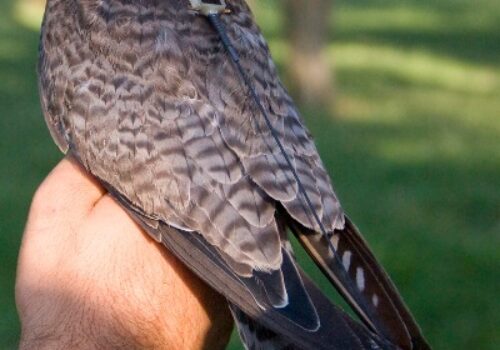
Red-footed falcon
One of these species is the Red-footed falcon, a bird that has suffered greatly due to the loss of nesting sites. Over the years, we have been partners in several projects aimed at strengthening this species’ population, by planting trees and installing artificial nest boxes among other conservation activities.
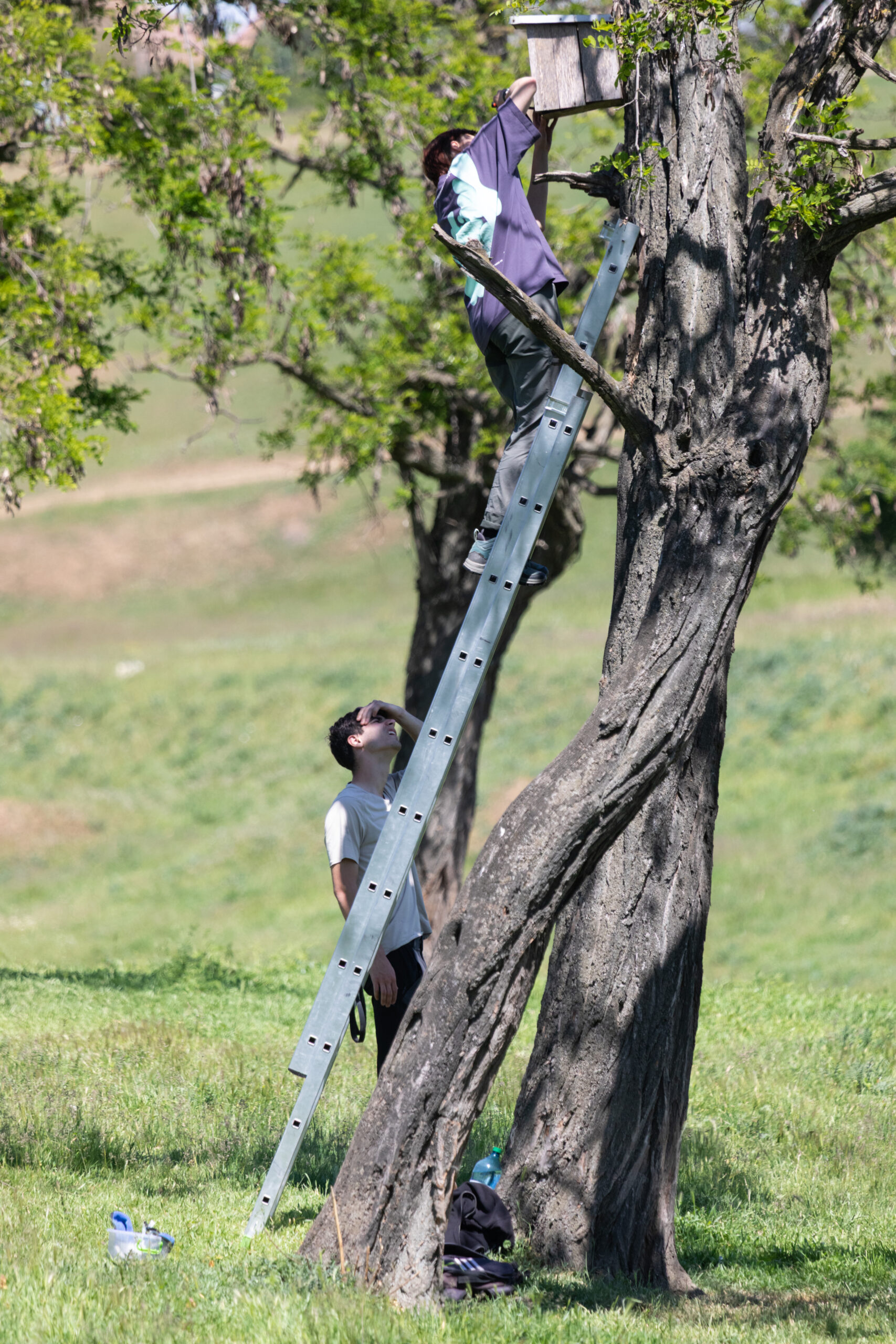
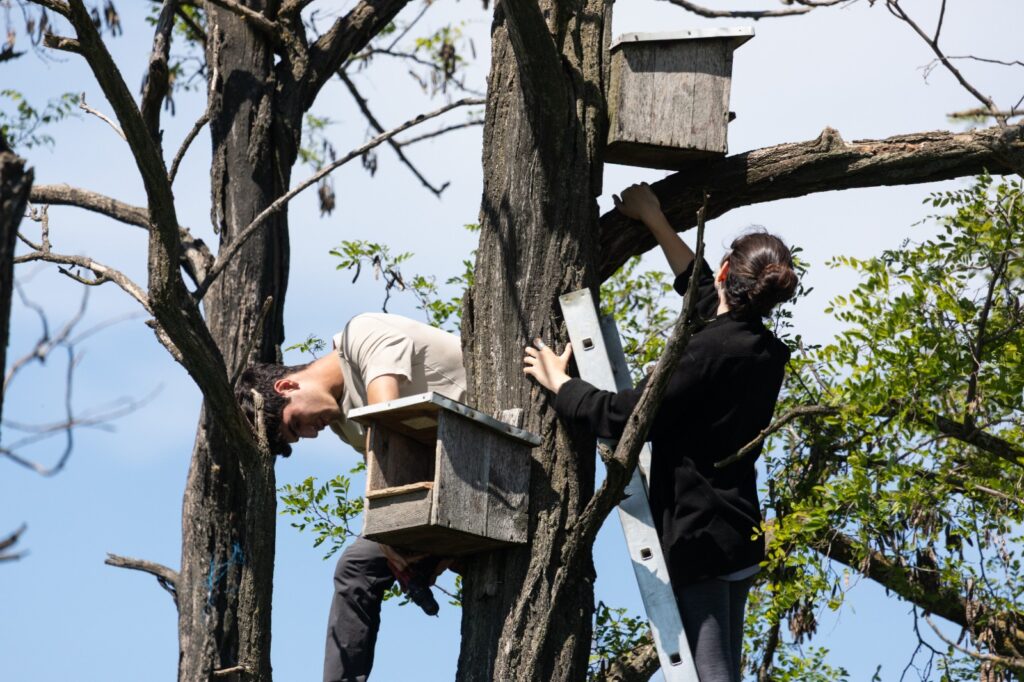
Our work does not end with the completion of a project. Every year we revisit the locations where we installed the nest boxes and carry out maintenance work or even replace the damaged ones. For example, we continue to maintain the artificial nestboxes mounted more than 15 years ago within a Red-footed falcon conservation LIFE project implemented between 2006-2009.
Our first destination was near Mihai Bravu (Roșiori commune, Bihor county) in the Lunca Barcăului Natura 2000 site, where in 2023 we installed 20 metal nest boxes and 10 made of wood. We chose to use two types of boxes to see which ones will the falcons prefer. Due to rainfall and organic matter left by the birds, wooden nestboxes degrade more quickly, so a more long-term option could be the metal ones – but only if we are sure they provide suitable nesting conditions.
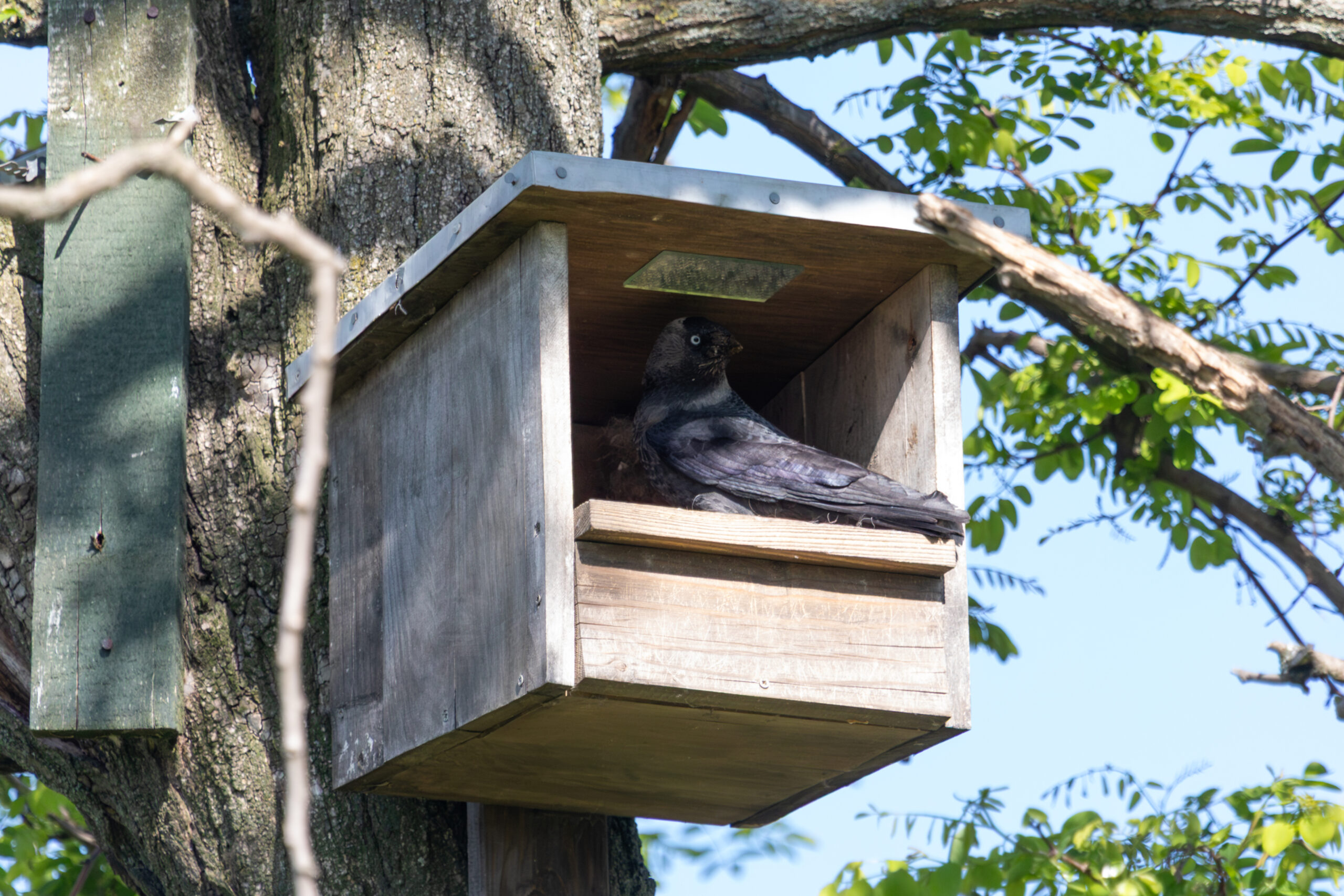
The new nesting places didn’t remain unoccupied for long. In 2024, 23 of them were used: 18 were occupied by falcons and 6 by western jackdaws. All the wooden boxes were occupied, while one third of the metal ones remained empty.
This year, during our spring visit, we checked the metal and wooden boxes, cleaned them and replaced the gravel we regularly use as nesting material. We will continue to monitor the occupancy rate of the metal boxes and if necessary, make improvements so that they are suitable in the long-term.
Our second destination was the colony near Livada de Bihor ( Bihor County), where we checked 70 artificial nestboxes to ensure optimal nesting conditions not only for red-footed falcons, but also other species – Long-eared owl, Common kestrel and Jackdaw -, who gladly use these nesting sites.

European roller
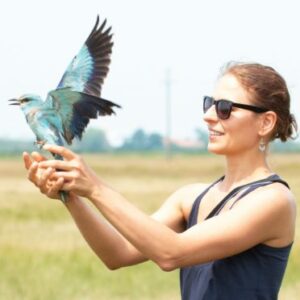
The lack of nesting possibilities was also the reason for the decline in the European roller population. Tree planting and installing artificial nestboxes – as part of several projects we took part in – have had the desired effect, with the number of breeding pairs increasing each year.
However, maintaining this success requires regular maintenance and the replacement of nest boxes damaged by the weather or even by vandalism. Of the 800 nest boxes installed as part of a LIFE project completed in 2020, only 500 remained in 2023, and the number continued to decrease in 2024.
Therefore, at the end of last year, we launched the “Endangered Species of the Year” programme and decided that in 2025 we would focus on the roller. We found allies – Betfair Development Romania – who understood the importance of conservation efforts and supported the purchase of 30 artificial boxes made of wood-concrete, a durable material. These nestboxes, along with 70 more made of wood, were installed in locations where previous ones had either been deliberately removed or damaged by harsh weather, as well as in new places that offer ideal habitat for rollers.
We aim to increase the number of artificial nest boxes and plant trees that, over time, may become natural nesting sites for this species.
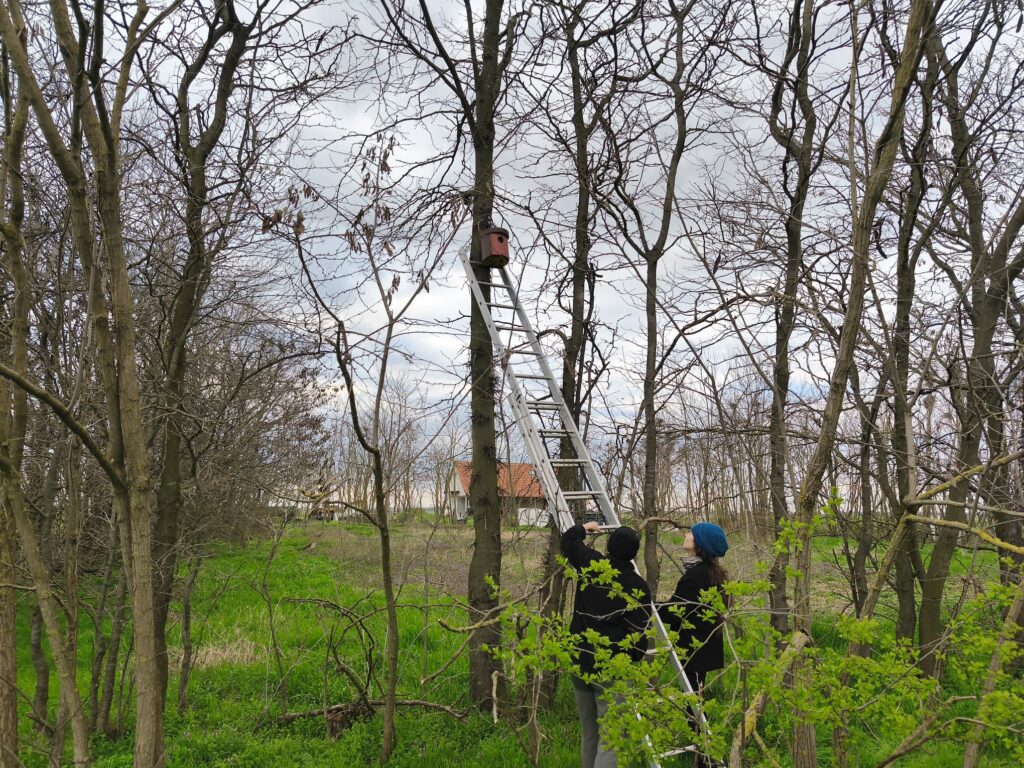
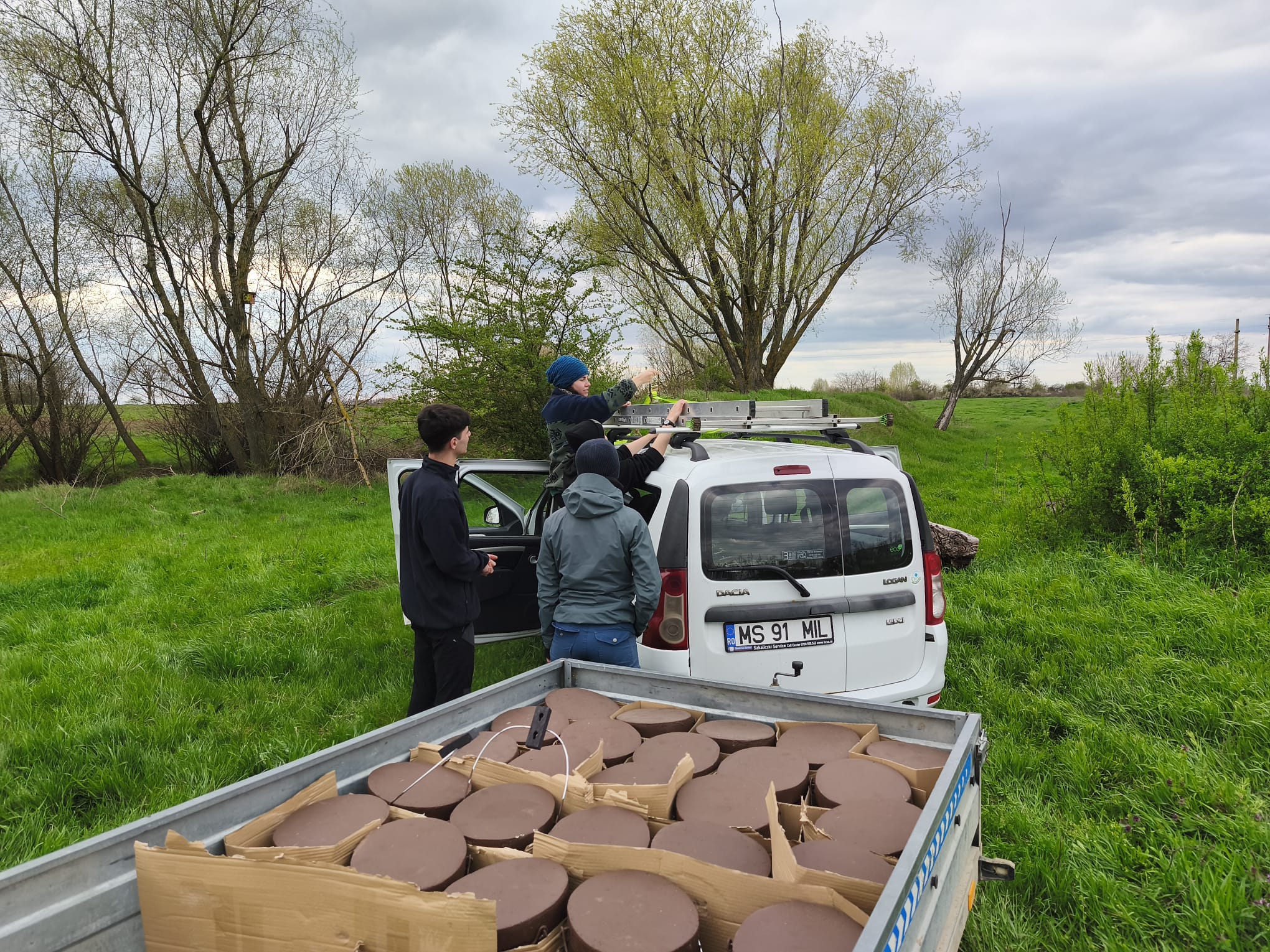
The conservation activities we carried out this year would not have been possible without the dedicated work of our volunteers, for which we owe them our sincere thanks.
Nature depends on us, and on you too! Be our partner in the “Endangered Species of the Year” programme, because every species counts!