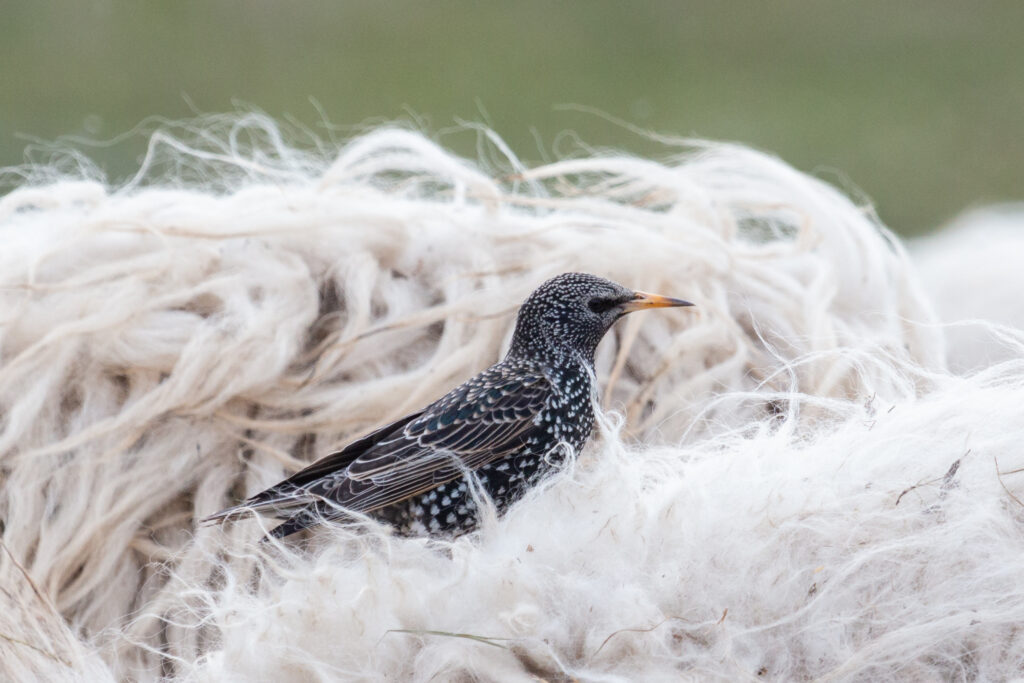
Have you ever heard the song of the Golden oriole, only to realise it was a European starling mimicking it? This species is a master at imitating other sounds, and individuals may mimic up to 20 different calls. Imitation is thought to increase repertoire size and the potential attractiveness of males. And not only males, but females sing as well, especially in the autumn, though they usually lack some of the species-specific song units of the males. Observing Starlings in nature, with their black plumage and purple and greenish iridescence, is always a treat, as is listening to their song.
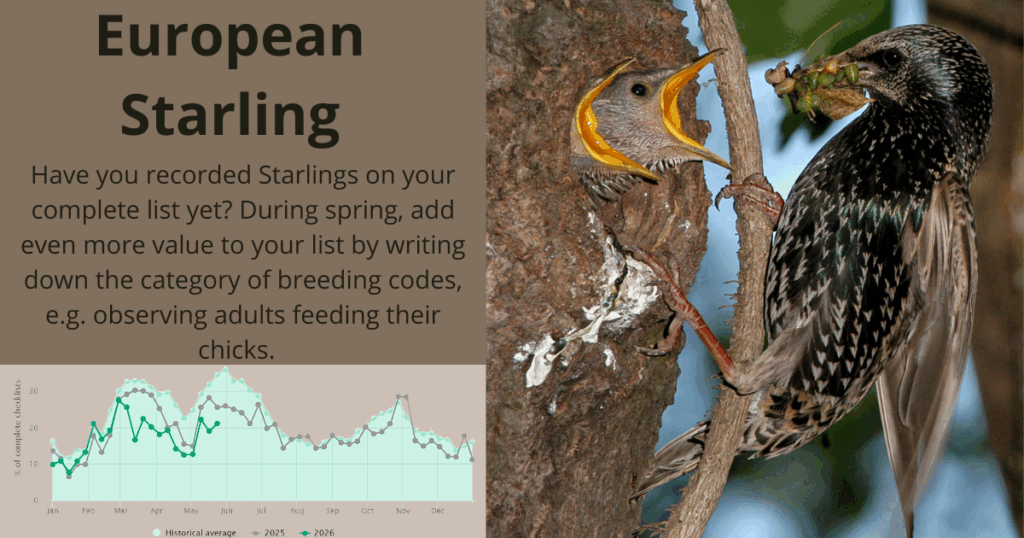
Whenever an opportunity arises, dedicate your time to making a complete list of all bird species you hear and see in a given time and place, as this provides much higher-quality information for your records and enables us to show the yearly patterns of species. And if you see an adult Starling feeding its chicks in a cavity, add the breeding code as well, making this an even more valuable record!
We encourage you to spend some time outdoors this weekend. The weather is warm, and after a week of work, you deserve to relax in nature and, why not, enjoy the songs of birds. If you happen to hear or see them, upload your observations to OpenBirdMaps and create a complete species list. By doing so, you will make a valuable contribution to the collection of data used for bird monitoring and conservation.
If you are not sure how to create a complete list, click here to find all the information you need.