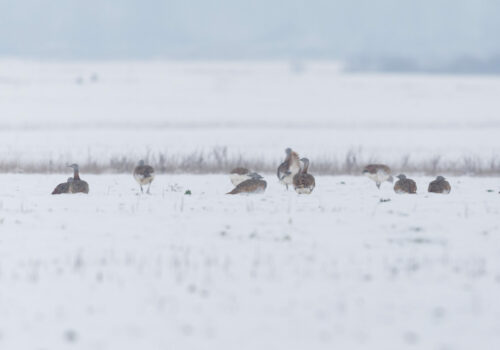
At the end of last year, as part of our Winter Bird of Prey Monitoring Programme, our volunteers once again surveyed the birds of prey wintering in Romania. A total of 55 observers covered 452 kilometres of survey routes and counted 789 birds of prey.
Above-average numbers of Common buzzards and Hen harriers
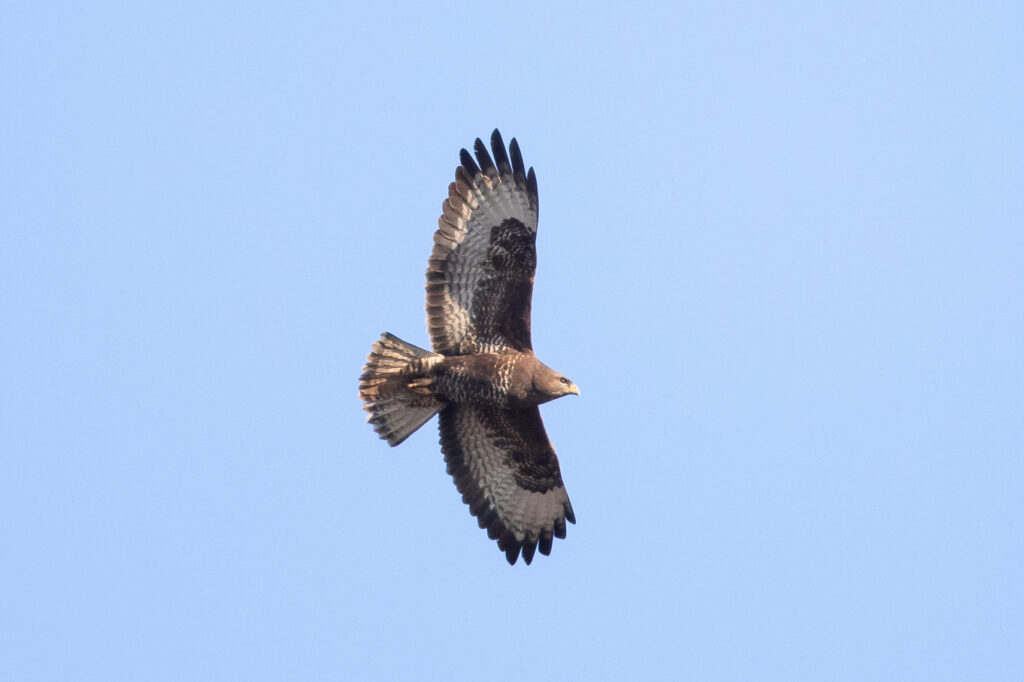
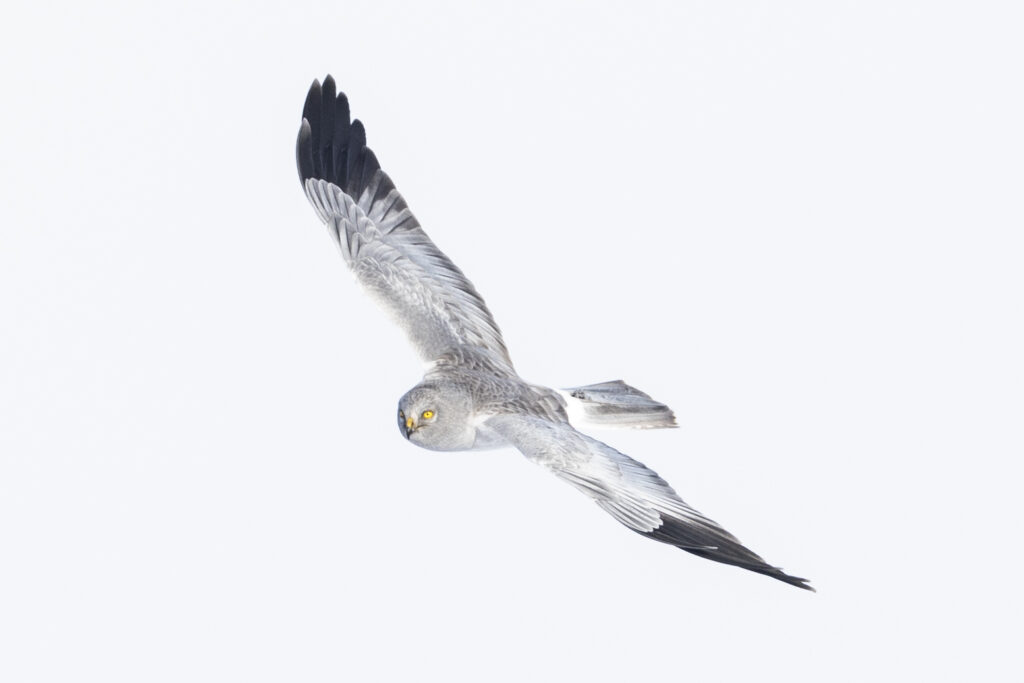
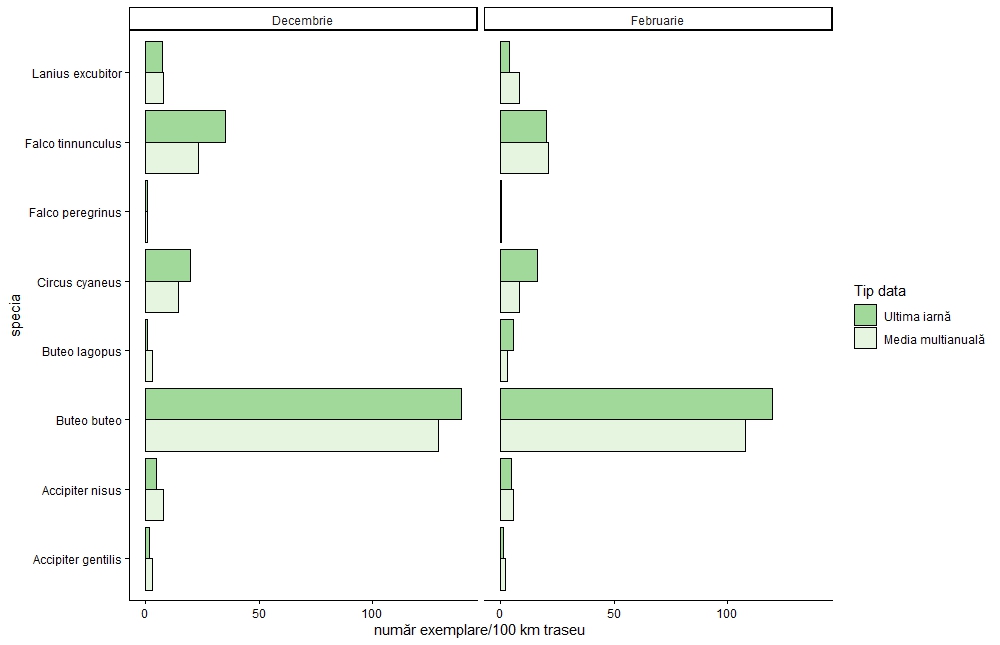
Comparing the records of the more frequently observed species with the average figures from previous years, we found above-average numbers of both Common buzzards and Hen harriers. Among the less frequently recorded species, our volunteers also observed five Imperial eagles, three Greater spotted eagles, three Saker falcons and two Long-legged buzzards.
Where did we find the highest numbers of birds of prey?
During the December survey, the highest density was recorded near Salonta, in Bihor County, with more than 10 birds of prey per kilometre. On the Orlat–Poplaca route in Sibiu County, the figure reached 6.5 individuals per kilometre.
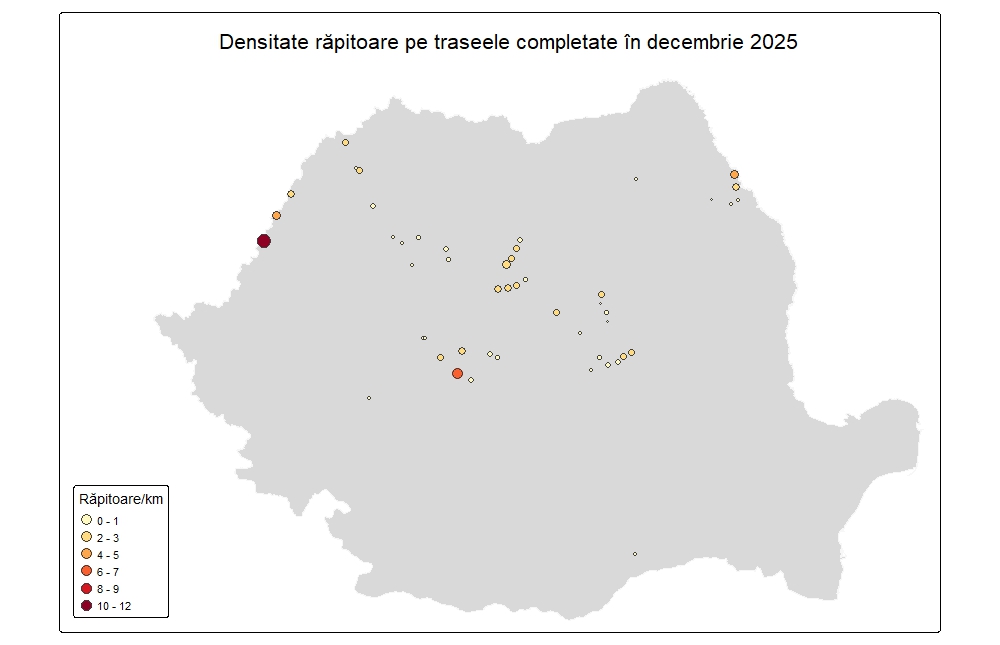
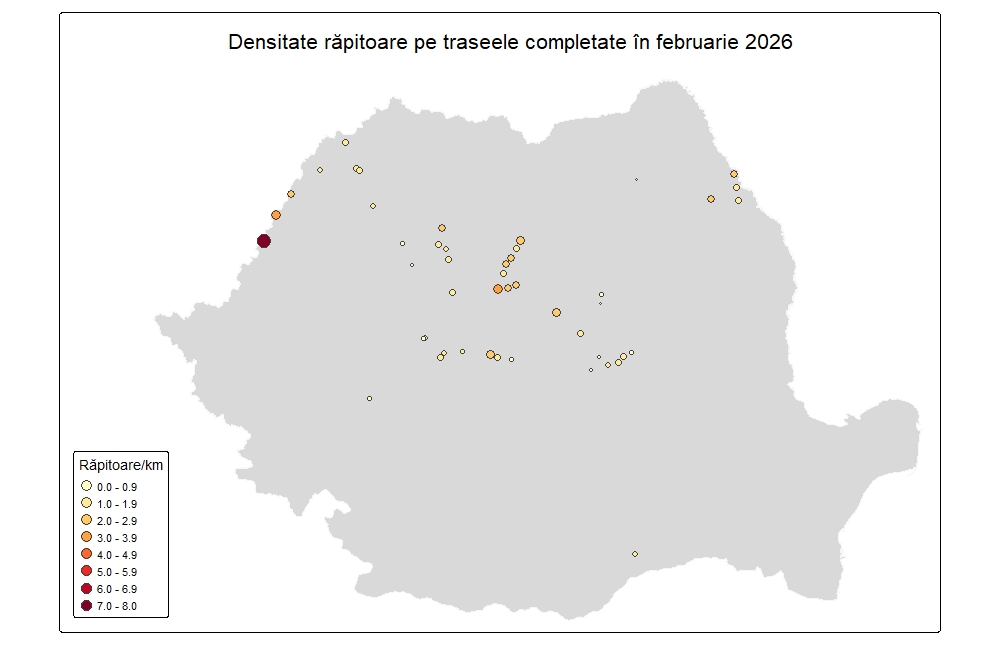
Densities of 3–5 birds of prey per kilometre were also recorded along the Traian–Toboliu and Mihai Bravu–Tămășeu routes in Bihor County, Probota–Trifești in Iași County, Mândra–Loamneș in Sibiu County, and Sânmărtinu de Câmpie–Voivodeni in Mureș County.
Salonta once again stood out during the February survey, with a density of 7 birds of prey per kilometre. Relatively high densities of 3–4 individuals per kilometre were also recorded along the Traian–Toboliu route in Bihor County and the Cornești–Leordeni route in Mureș County.
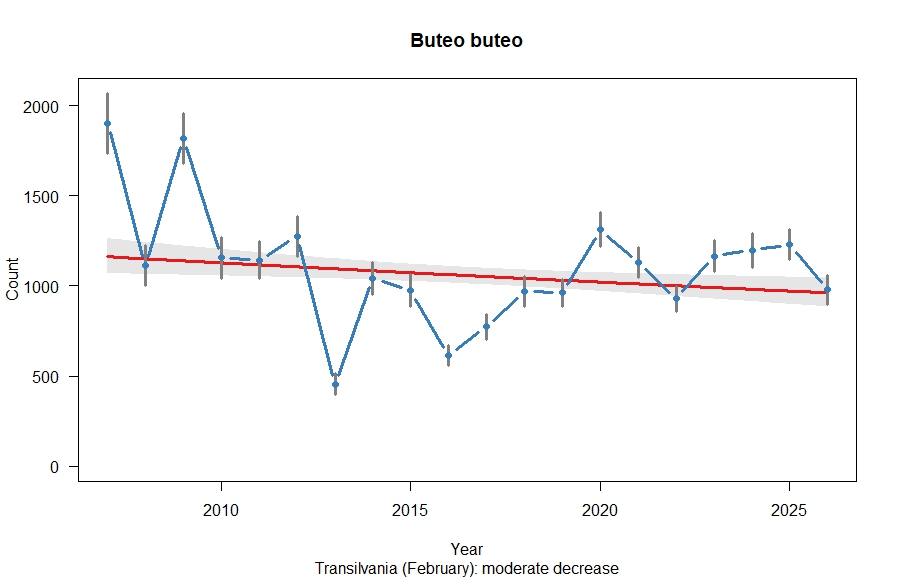
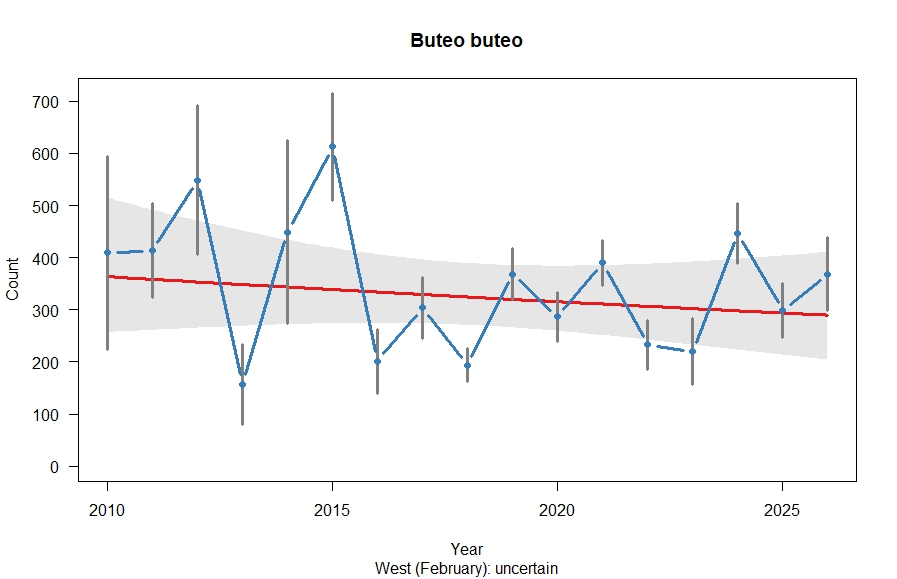
Are wintering Common buzzard numbers changing?
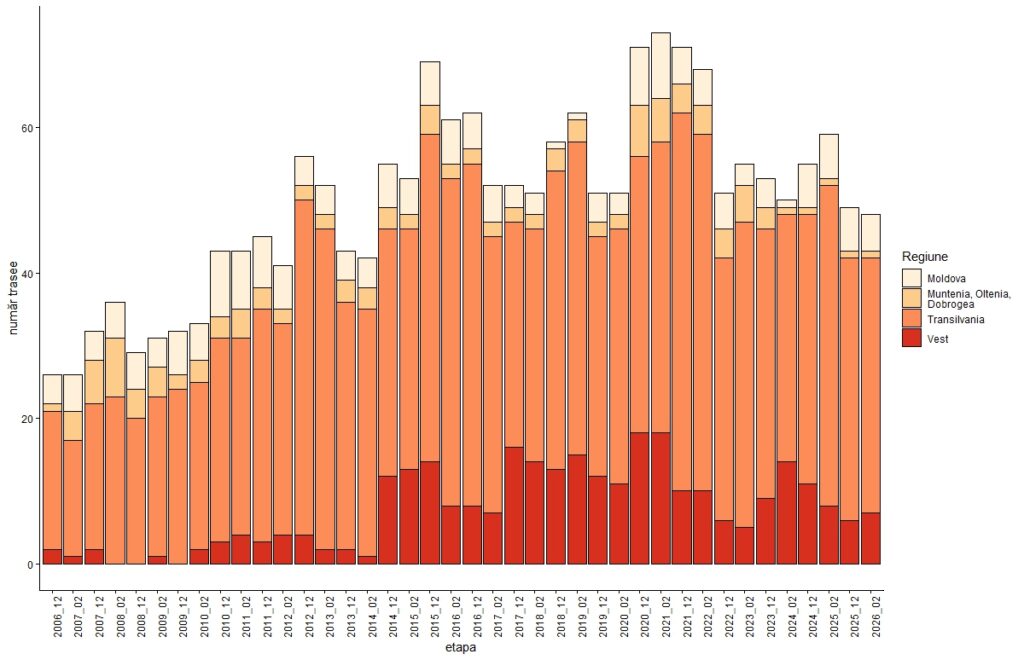
Looking at the data from the three regions for which we have sufficient observations, we can see a declining trend in the number of wintering Common buzzards in both Transylvania and Moldavia. We do not know the reason for this decline, but it may be linked to increasingly mild winters. As a result, more birds may be choosing to spend the winter further north rather than in Romania.
In Moldavia, wintering numbers fluctuate considerably: winters with generally low densities are occasionally followed by seasons with exceptionally high figures. By contrast, the wintering population in the Western Plain appears to be more stable.
Long-term monitoring helps us identify these changes and provides an important basis for understanding the factors behind them.
We would like to thank all our volunteers for their fieldwork and valuable contribution to these surveys!