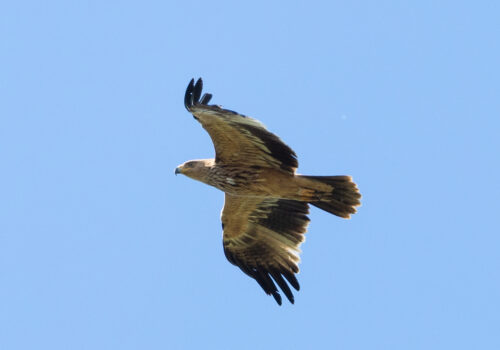
At the beginning of June, we were delighted to share that we had located the first Eastern imperial eagle chicks. Now we have clear evidence that, of the eight breeding pairs we identified, five have successfully raised young. But let’s start from the beginning.
At the end of last year, we decided to focus our 2026 conservation efforts on the Eastern imperial eagle, which became the flagship species of our annual Endangered Species of the Year campaign.
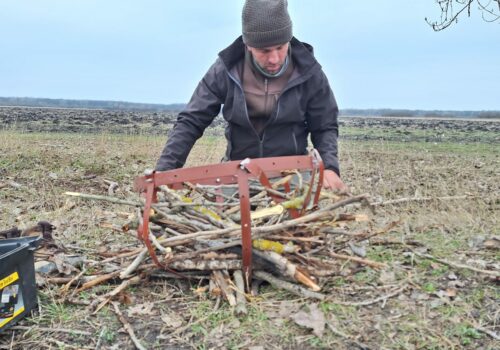
The first activity of this year’s campaign was to monitor several territories where Eastern imperial eagles had been observed in previous years. In April, we also surveyed a territory where a young pair had been seen in earlier years but had not yet built a nest. We decided this would be the ideal location to install an artificial nest.
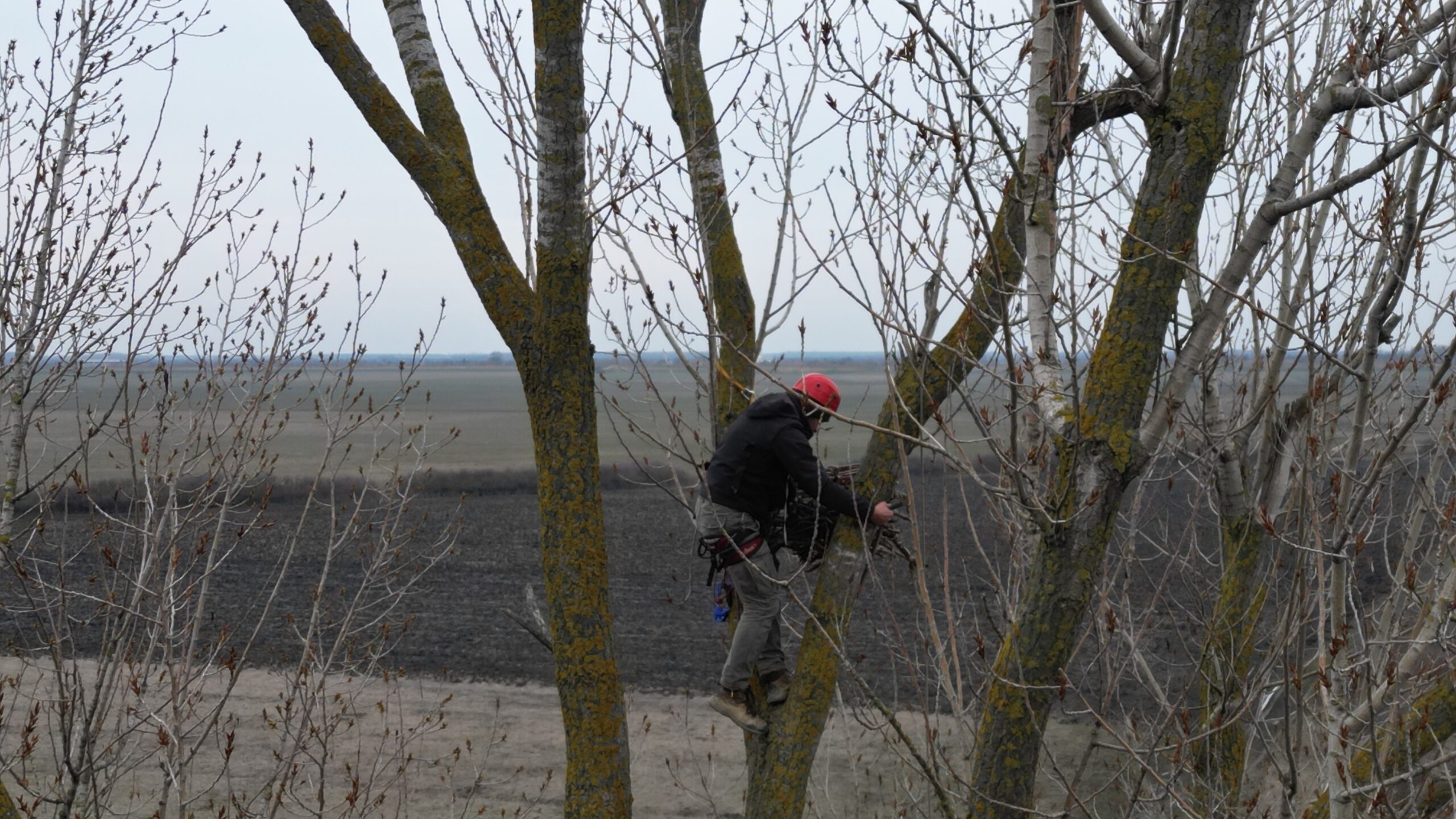
After months of dedicated work and hundreds of kilometres in the field, our colleagues succeeded in locating eight breeding pairs, a new record for the species, considering that it had not bred in Romania for 45 years prior to 2016.
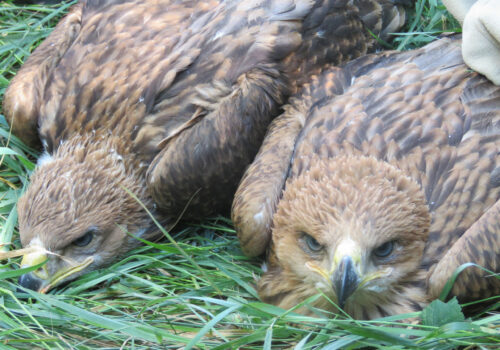
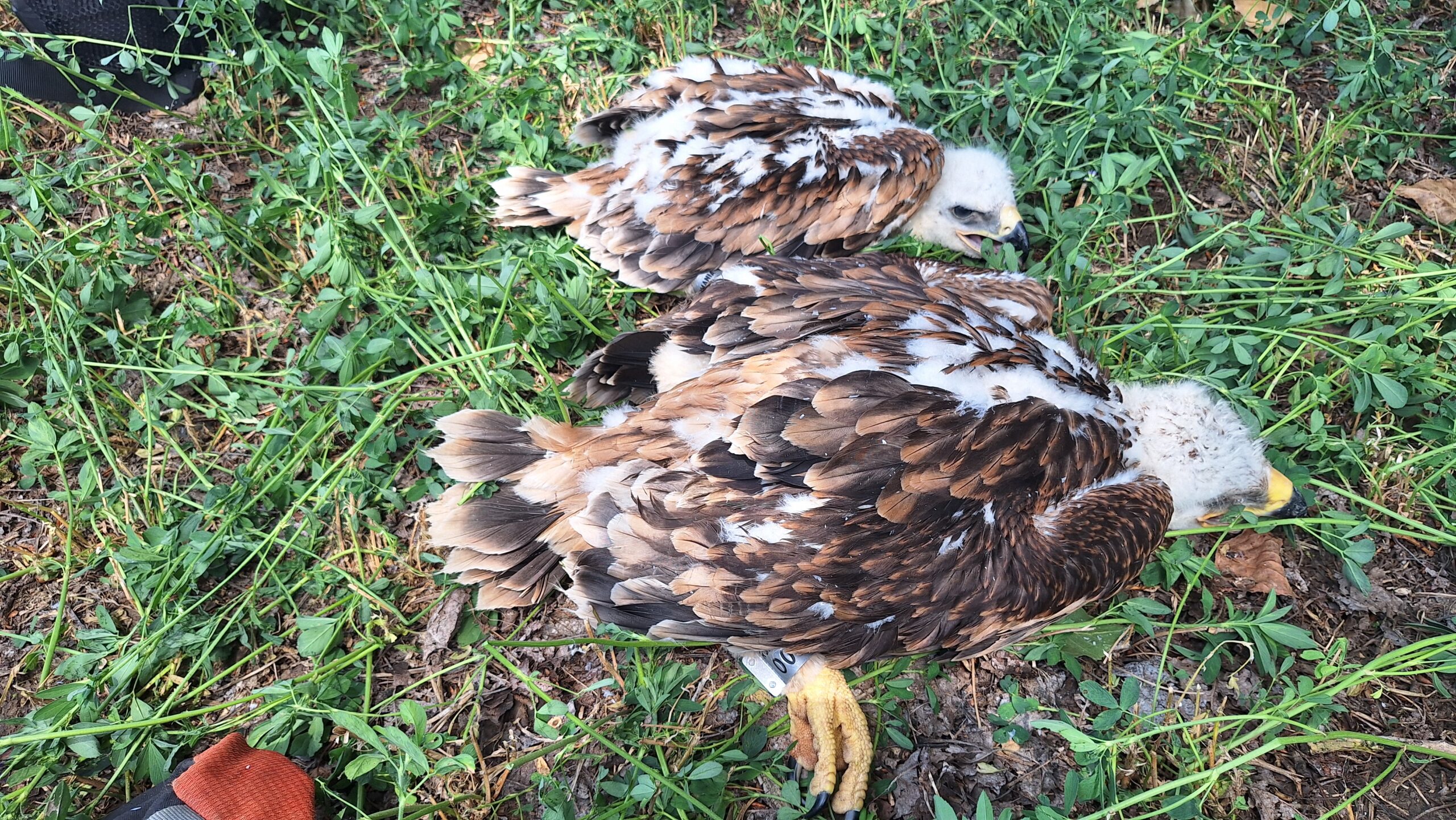
June involved, yet again, an intensive period of fieldwork. We visited two nests to ring the chicks. In one nest in Arad County, we ringed two Eastern imperial eagle chicks. The chicks, around six weeks old, were fitted with individually coded rings, allowing them to be identified if they are observed again in the future. The second nest we visited for ringing was in Timiș County, where we ringed a single well-developed chick with almost complete plumage.
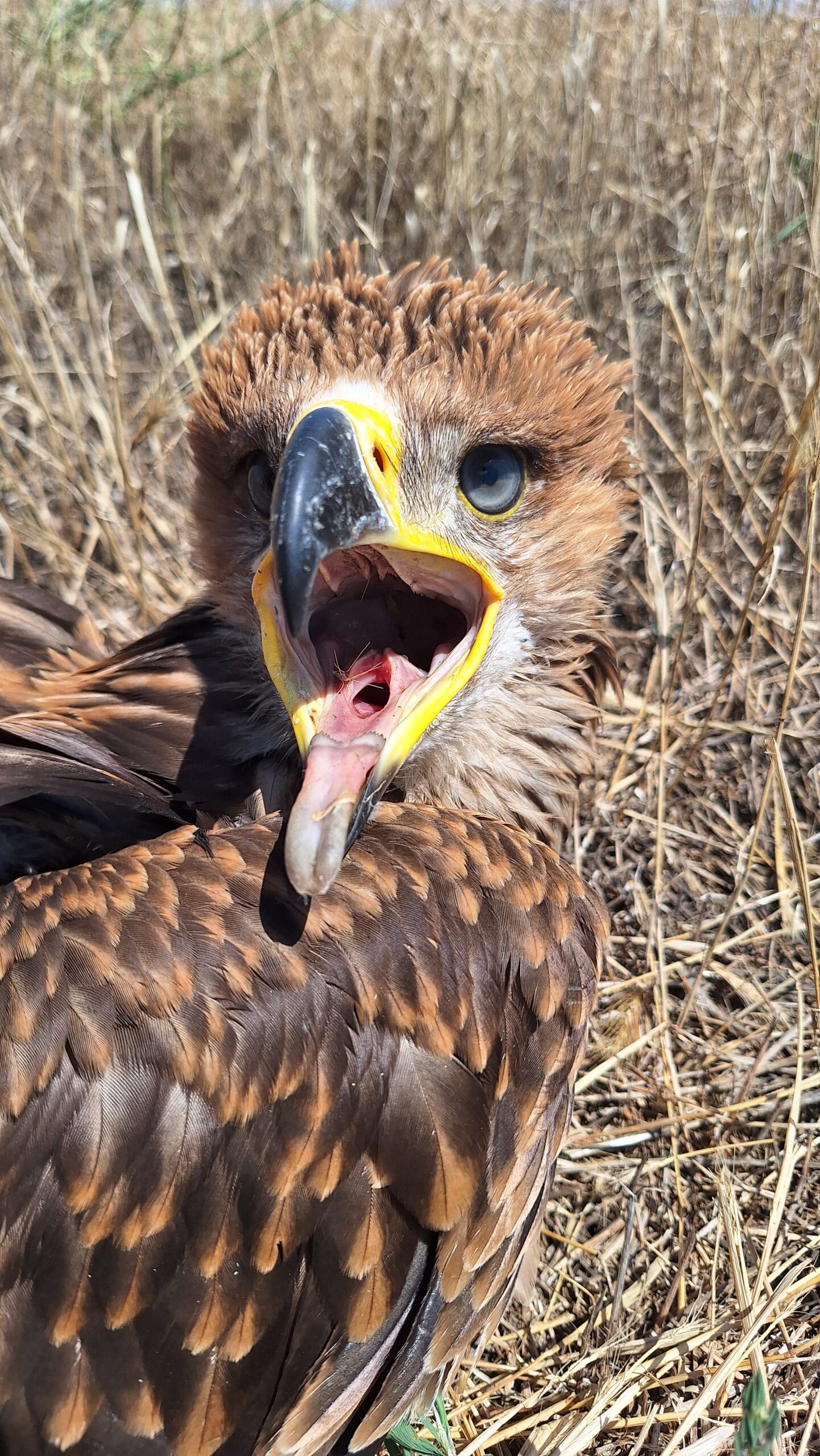
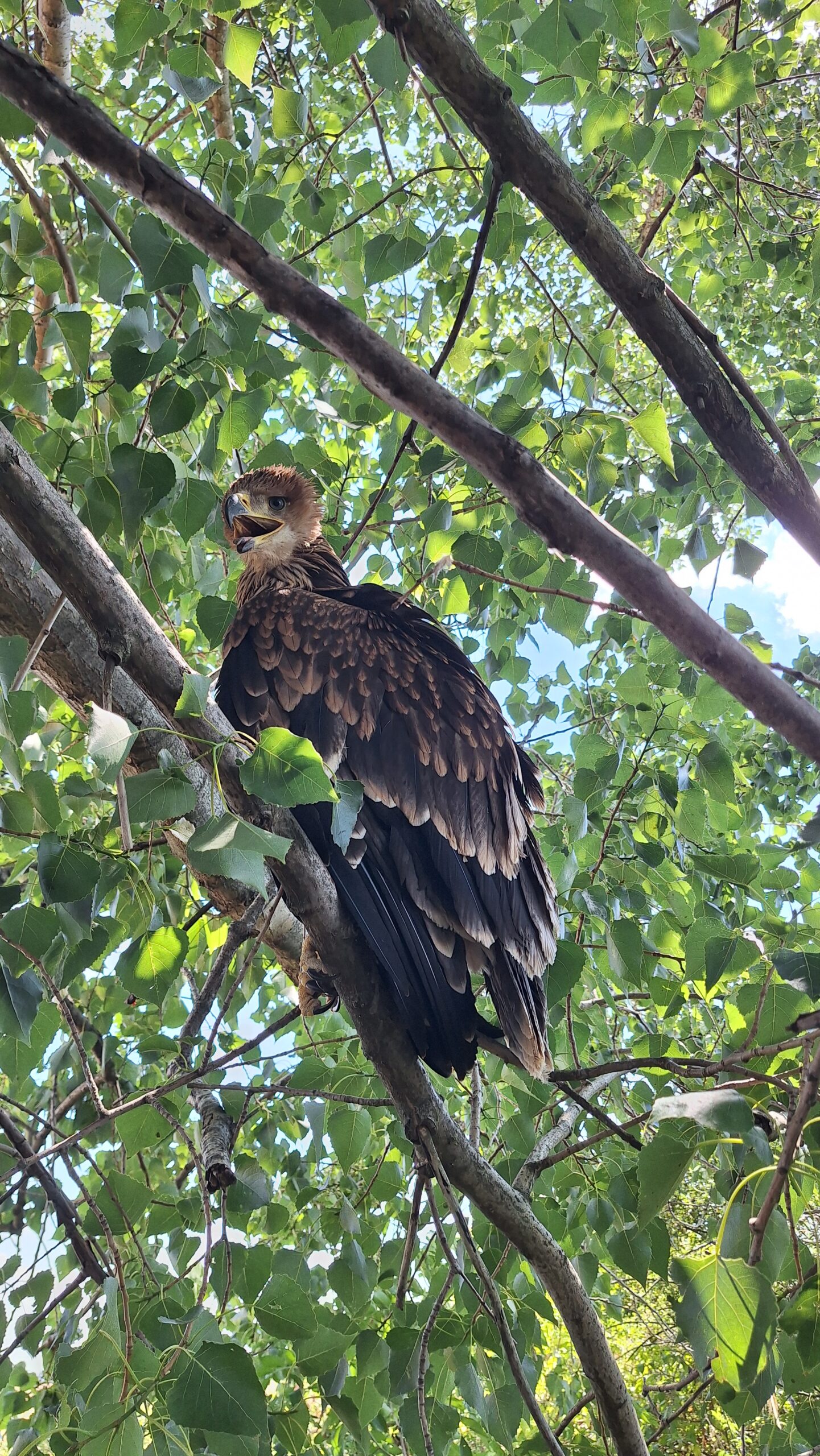
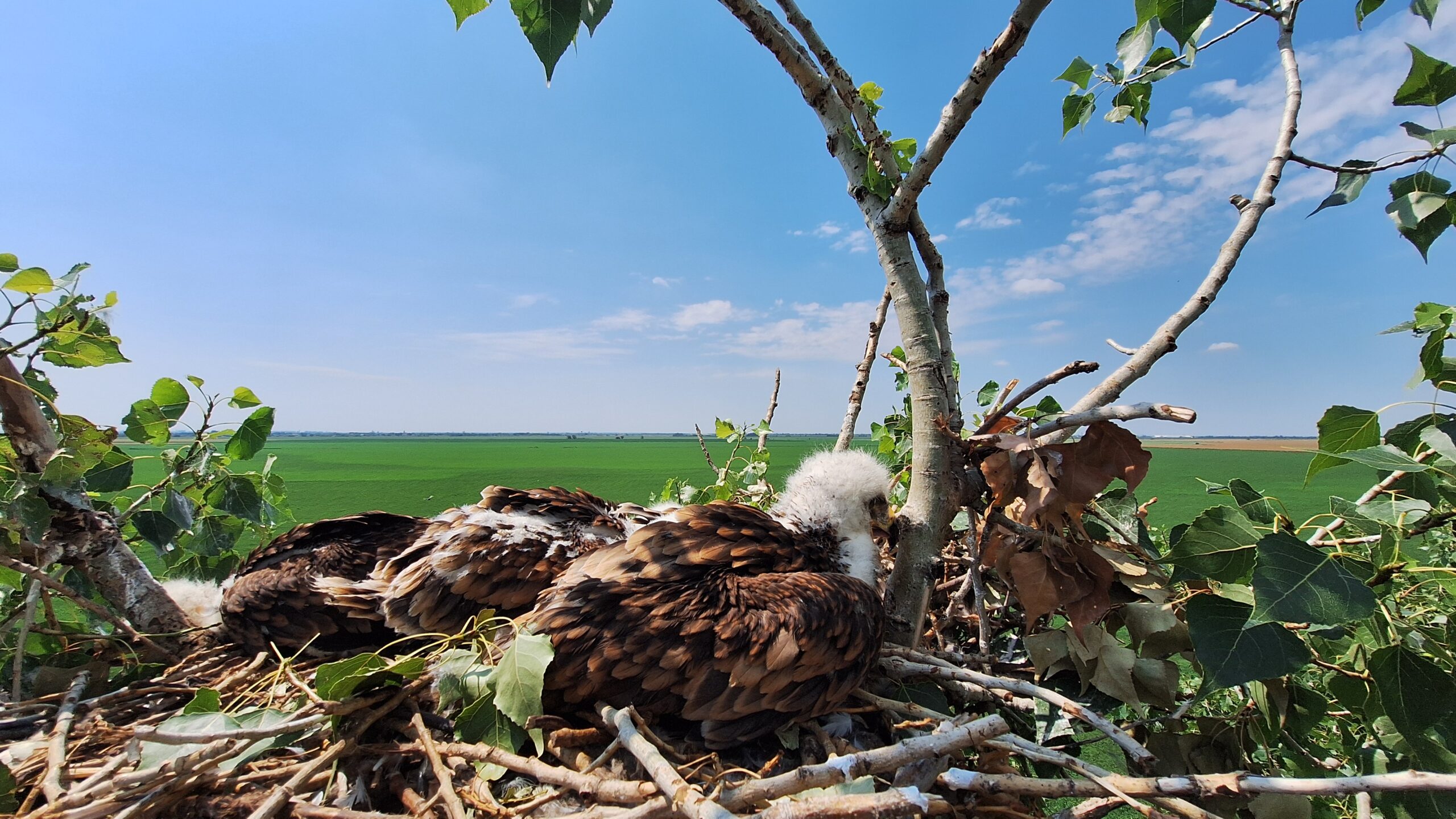
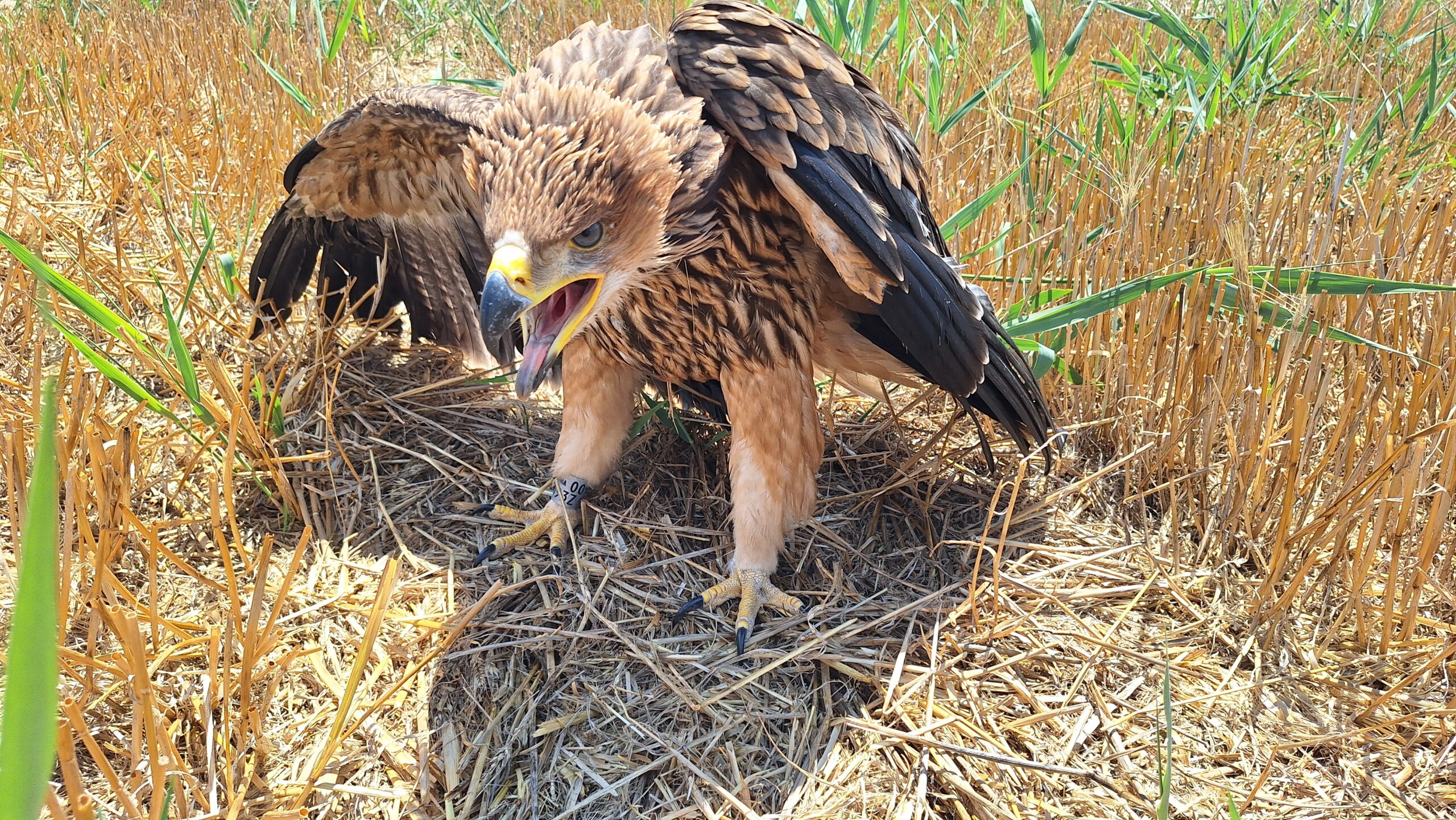
During the same month, we visited all the nests where we knew breeding pairs were present, and the results were encouraging: five of the eight pairs successfully raised a total of ten chicks. In addition, there is a strong possibility that another pair also raised young, but we believe the chicks had already fledged by the time we visited the nest.
At the artificial nest installed in April, we found no evidence of breeding, although we did observe Eastern imperial eagles nearby, which is an encouraging sign for the future.
None of these activities would have been possible without the support of those who recognised the importance of conserving this species and helped our work, either by donating 3.5% of their income tax or by making a direct donation.
Our work to protect the Eastern imperial eagle continues. Later this autumn, we plan to organise a tree-planting initiative, as one of the main reasons for the species’ decline has been the loss of solitary trees and trees along woodland edges.
You too can help this effort by joining us for the tree planting or by supporting our work with a donation.