We’re enjoying a beautiful autumn, and a walk in nature promises to recharge your energy. One of the species you can spot at this time is the Black redstart (Phoenicurus ochruros).
Unlike its close relative, Common redstart, the Black redstart stays mainly in Europe throughout the winter, choosing a warmer region around the Mediterranean Sea with suitable food sources.
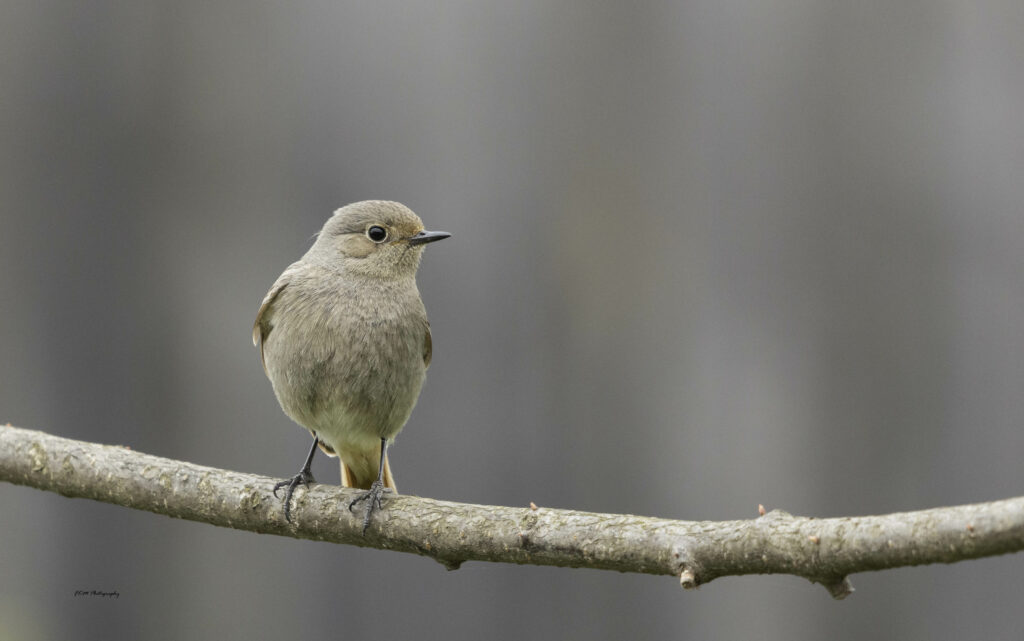
The natural habitat of the species always included rocky habitats, making it primarily a mountain species in most parts of its range. However, since the mid-19th century it started to breed on buildings, also appearing in urban areas and spreading its range to lowland areas within the 20th century. It is therefore not unusual to observe a Black redstart in the city, calling from the roof of a building, and swagging its red tail in its specific manner.
During autumn and winter, the species should be even more numerous in SE Europe than during the breeding season, as in addition to residents, migrants from further north arrive. At the same time, the Black redstart is one of the last species to begin migration, making November the ideal month to observe it.
According to complete lists uploaded to the EuroBirdPortal – an international platform that compiles bird distribution data across Europe – it seems that the reporting rates at the beginning of October in 2025 were lower than the historical average, however, towards the end of October, the species has reached its average values. This smaller deviance of the yearly pattern might have been caused by a slightly later arrival of migrants.
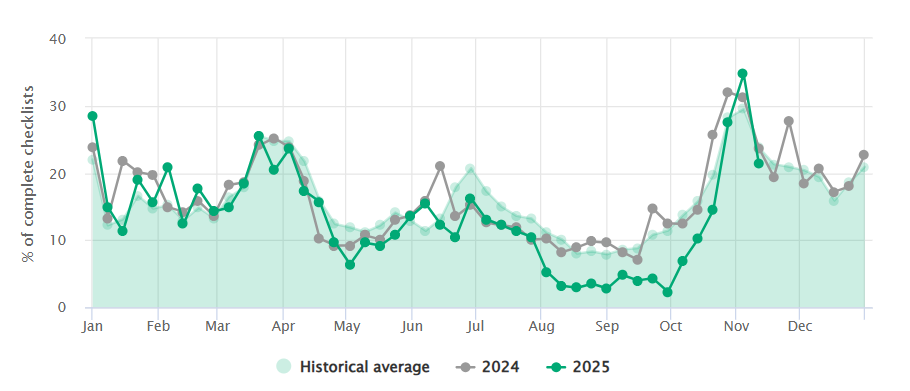
If you see it in your vicinity in the following months, do not forget to also include all other bird species that you see and hear and make a complete list, as this data can directly inform the phenological graphs of species.
If you don’t know how to make a complete list, don’t worry, we prepared a material where you can find all the details.
You can upload your observations in our database OpenBirdMaps (OBM). The data you upload to OpenBirdMaps not only support national research but are also included in the EuroBirdPortal database, helping to map bird migration and distribution patterns across the continent.