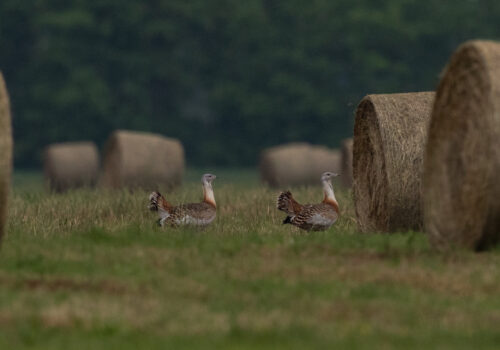
We recently shared news about the disappearance of an important refuge for Great bustards in the Salonta area (Bihor County), which threatens the survival of Romania’s only viable Great bustard population.
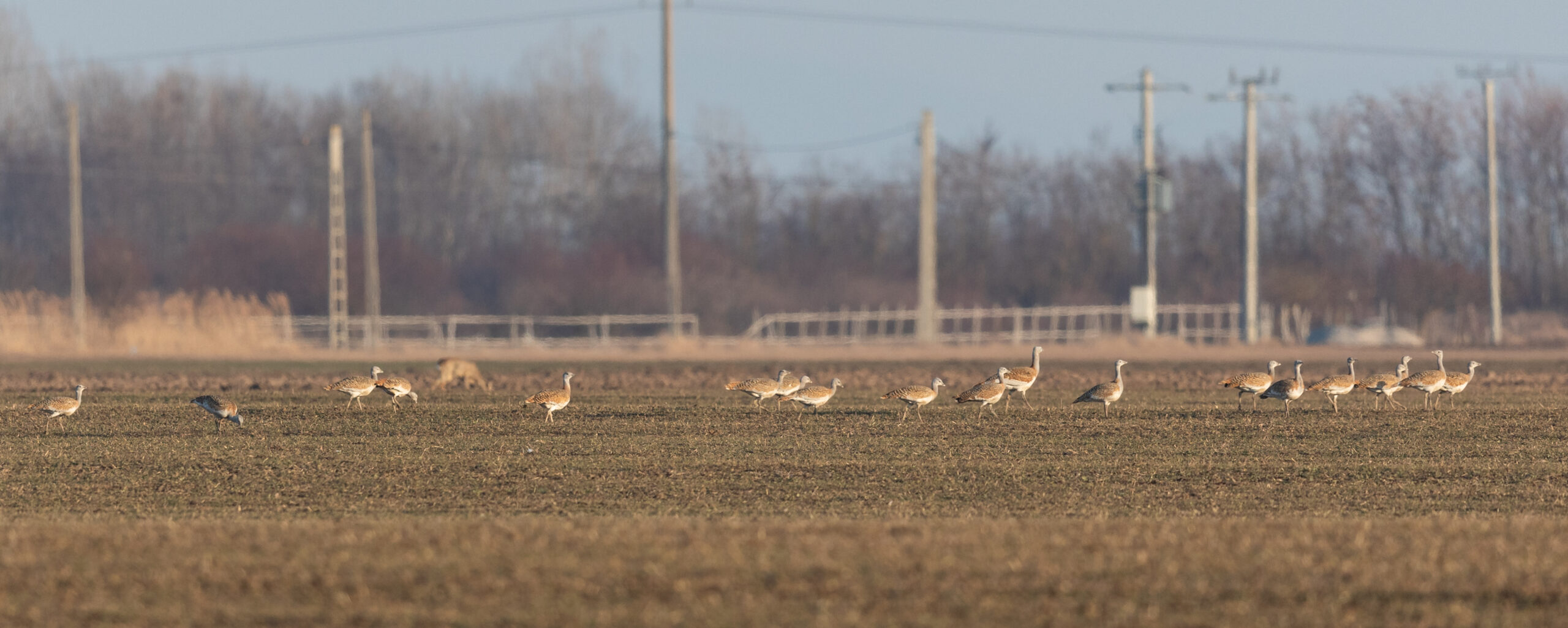
However, Romania is far from alone in facing this challenge. Steppe birds – including the Great bustard – are among the bird groups currently experiencing the steepest population declines, a major cause for conservation concern. The Otididae family is particularly vulnerable, as many of its species share agricultural habitats with humans and therefore require active conservation measures.
The Great bustard (Otis tarda) and the Little bustard (Tetrax tetrax) are two well-known species from this family that inhabit the Palearctic region, an area under high anthropogenic pressure, land-use change, and agricultural intensification. As previous LIFE projects in Central Europe have shown, it is still possible to successfully protect these two species through the implementation of key conservation measures. Although the European Great bustard population has declined by one third in just 11 years, the Western Pannonian population (Austria, western part of Hungary and Slovakia) has more than doubled during the same period.
Building on 25 years of successful Great Bustard conservation experience in Central Europe, the large-scale LIFE EUROBUSTARD initiative aims to halt the ongoing decline of both the Great Bustard and the Little Bustard across Europe.
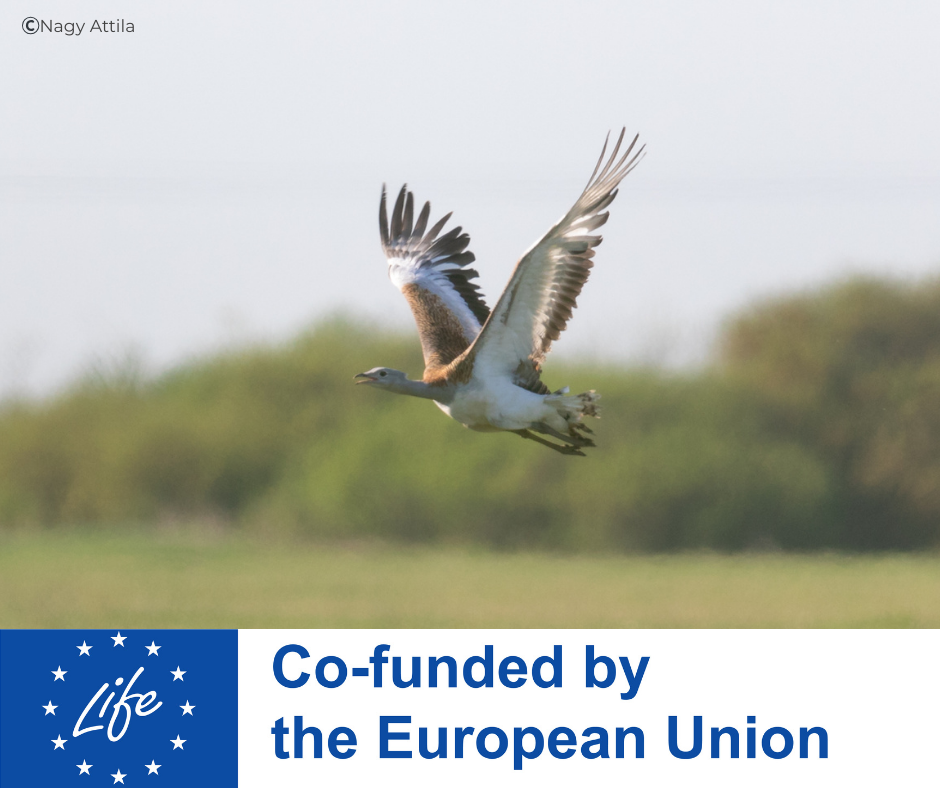
The project “Cross-border Protection of the Great bustard and the Little bustard in Europe”, carried out by 30 partners from 8 countries (Austria, France, Germany, Hungary, Portugal, Romania, Slovakia, Spain) – including the Milvus Group – focuses on three main action areas:
- extensive habitat-improvement measures;
- reducing mortality caused by collisions with overhead power lines;
- reducing mortality caused by agricultural machinery.
The Milvus Group’s activities will focus on protecting the last remaining Great bustard habitats in the Salonta area (Bihor County), near the Hungarian border. Within the framework of this project, our activities will focus exclusively on the conservation of the Great bustard, as, according to existing data, the Little bustard does not breed in Romania, it appears sporadically in migration and during winter in the southeastern part of the country, especially Dobruja.