At this time of year, many waterbird species gather in large numbers at wetlands, offering an excellent opportunity to monitor population sizes, trends and changes in their distribution, as well as to identify key sites for their conservation.
In a rapidly changing world, monitoring waterbirds helps us understand the health of wetlands and the species that depend on them, and enables informed action for their sustainable management. Over the past 60 years, the International Waterbird Census (Midwinter Count) has grown into one of the world’s largest and longest-running biodiversity monitoring programmes.
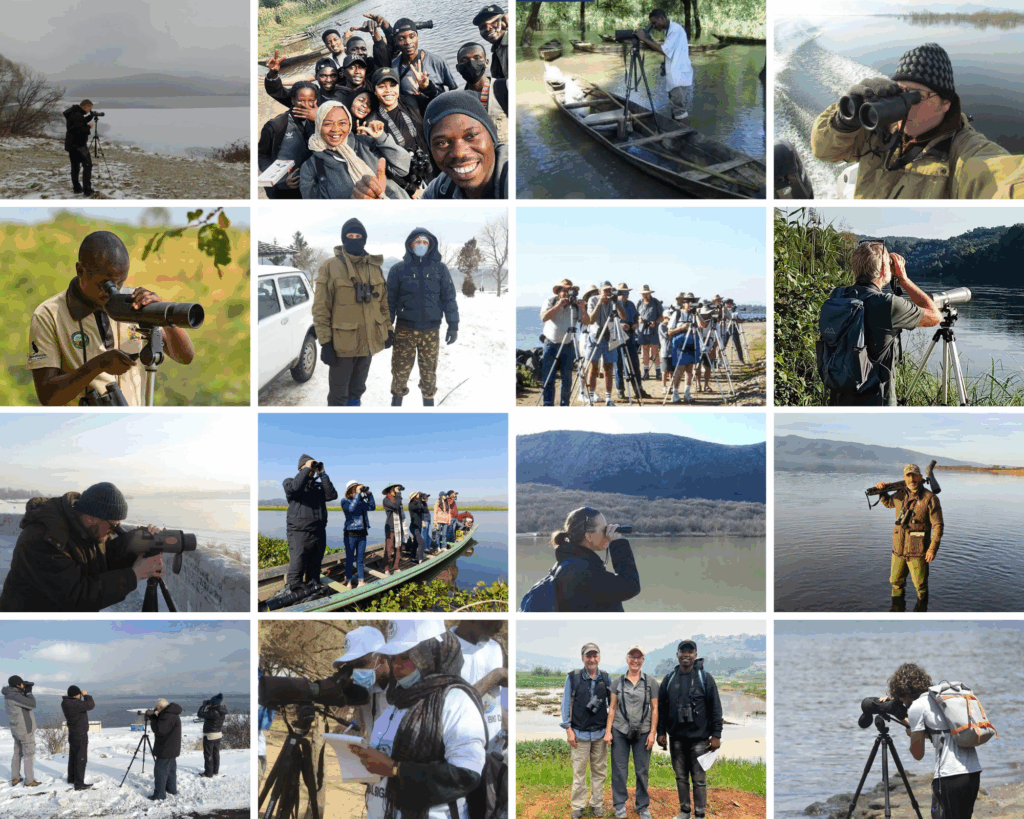
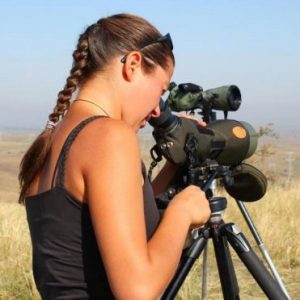
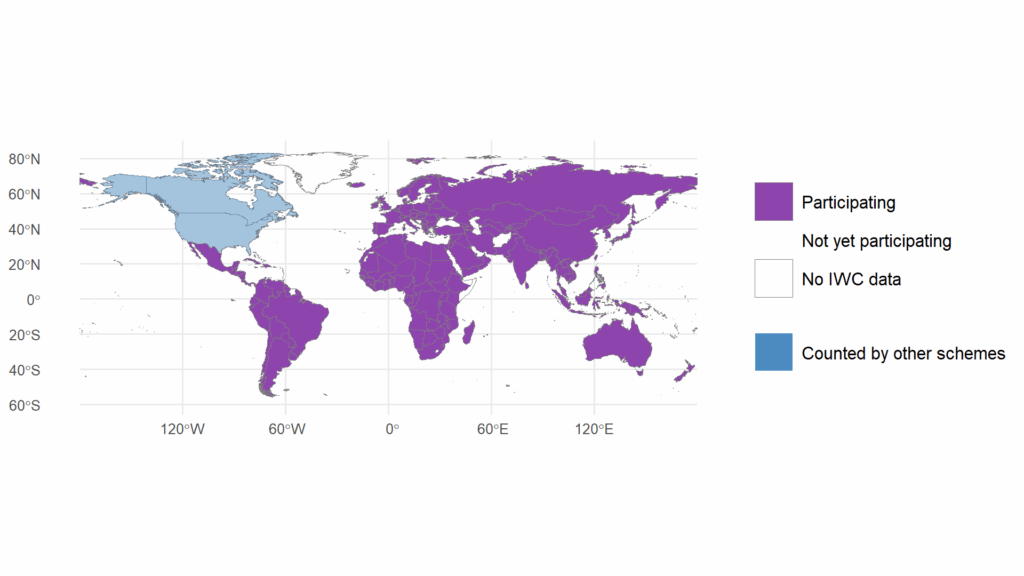
For six decades, during a fixed period in January, scientists and volunteers equipped with telescopes and binoculars have headed out to wetlands in their regions — from the frozen lakes of Europe and the warm coastlines of the Caribbean to the mudflats of Asia and the tropical estuaries of Africa. Coordinated internationally by Wetlands International, the census brings together tens of thousands of participants who collect data from 189 countries and territories, monitoring more than 57,000 wetlands worldwide.
Designed to estimate waterbird population sizes and trends, identify and monitor priority wetlands for these species, and support wetland protection and management, the census has contributed to remarkable conservation achievements, including:
- Designation of 956 Ramsar Wetlands of International Importance, covering 1.5 million km2 (size of Mongolia);
- Identification of 2,701 Important Bird Areas, covering 1.75 million km2 (size of Libya);
- Identification of 2,721 Special Protection Areas across the EU, covering 418,000 km2 (larger than Germany).
In Romania, the programme is coordinated by the Romanian Ornithological Society (SOR) and the Milvus Group, which have been counting waterbirds in the country’s wetlands with the support of volunteers since the 2000’s .
In January 2025, 189 observers covered 526 sites nationwide, counting over one million individual birds belonging to 190 species.
Between 10 and 20 January, we will once again head out to count waterbirds, and we invite you to join us! If you are familiar with waterbirds and would like to actively contribute to their conservation, click here to find out all the details. Your help is extremely important!