The Blue tit (Cyanistes caeruleus) is one of the most familiar bird species we encounter across Europe. Although it was originally associated mainly with oak and birch forests, it can now be found in a wide variety of habitats, as long as there are deciduous trees. The species is not shy around people, most often visiting our gardens and various urban green spaces, especially in winter, when it comes to bird feeders.
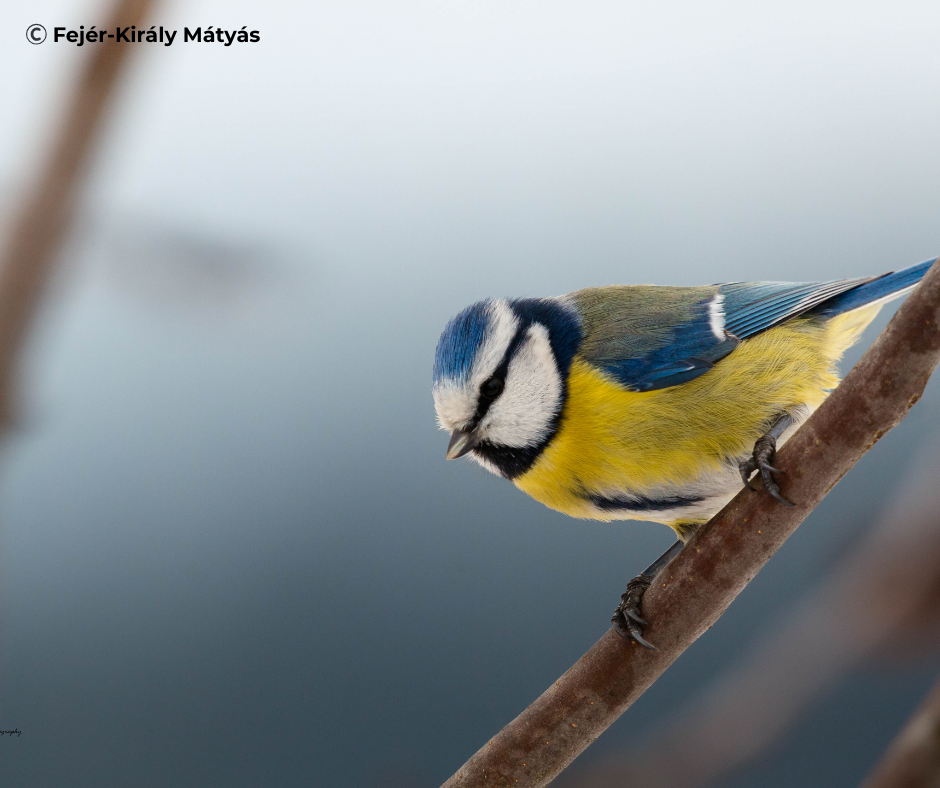
With its bright blue crown, it brings a splash of colour and joy to dull winter days. Although the blue tit tends to be resident in the central and southern parts of its range, northern populations are partially migratory, regularly travelling greater distances to southern Europe, with juvenile birds making up the majority of migrants.
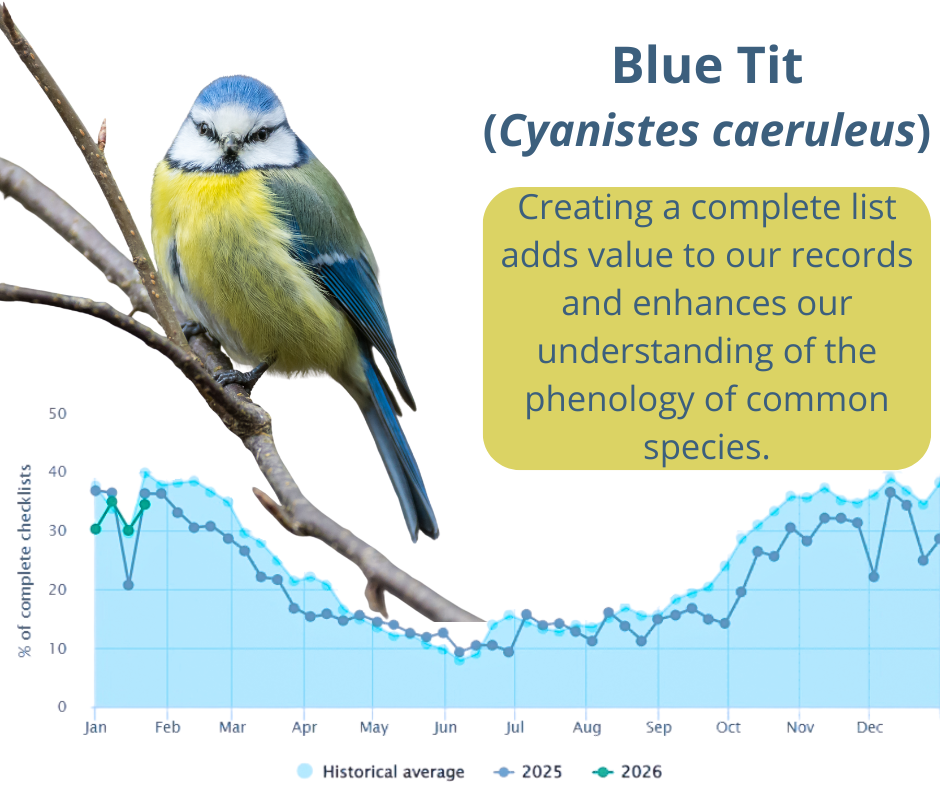
When we look at the species’ phenological graph based on complete lists, it is unsurprising that the reporting rate is higher in south-eastern Europe during the winter months. Therefore, every outing in which we record all the species we see and hear, and compile a complete list, directly contributes to our understanding of each species’ phenology, including the most common ones.
If you know how to make a complete list, we encourage you to do so whenever you are in nature. If you are unsure where to start, we have prepared an article with all the information you need.
Enjoy data collecting!