[singlepic id=278 w=250 h=240 float=left]n data de 25 noiembrie 2009, la Rin Grand Hotel din București a avut loc Conferința Trans European Wildlife Networks. Conferința – organizată în colaborare de către Asociația Grupul Milvus, Agenția Națională pentru Protecția Mediului și Euronatur – a marcat sfârșitul unui proiect internațional cu același titlu, care a durat un an și jumătate.Proiectul, implementat de către organizații și instituții partenere din 6 țări (Asociația Grupul Milvus fiind partenerul de proiect din România) s-a axat pe următoarele:
diminuarea fragmentării cauzată de dezvoltarea infrastructurii de transport (cea existentă, respectiv cea planificată) & schimbările peisagistice; specii vizate: carnivore mari
crearea unei rețele de experți pe nivel național, respectiv internațional
formare profesională, în special în România și Bulgaria
La conferință au participat partenerii de proiect (prezentând experiențele din România și din străinătate), reprezentantul Comisiei Europene pentru România în probleme de mediu, precum și factori de interes din țară, cum ar fi reprezentanții Companiei Naționale de Autostrăzi și Drumuri Naționale, diverse companii care efectuează studii de impact asupra mediului în cazul proiectelor care vizează infrastructura de transport, Agenții Regionale pentru Protecția Mediului, reprezentanți ai diverselor arii protejate, ONG-uri interesate, etc. Numărul total de peste 60 de participanți a confirmat importanța subiectului.
Considerăm că din această perspectivă evenimentul a reprezentat un pas deosebit de important, fiind primul de acest gen din România, când toate părțile interesate în subiect s-au întâlnit și au avut șansa de a începe un dialog contructiv.
Prezentările de la conferință pot fi accesate aici (în format PDF).
It is good to know that some people on this planet go forward to ward better protection of the environment and wildlife. While Europeans are far advanced in their efforts, states and provinces in North America only pursue profit-orientated actions. For instance, environmental agencies constantly alter eco-systems to maintain economic sustainability. Read more at: http://sites.google.com/site/stopkilling4profit
E-mail: hajnal.kuti@milvus.ro
Tel: 0720-531.061
Membru al echipei de administrație al Grupului Milvus din 2018, cu studii in economie. S-a implicat în proiect management și coordonare membri. Momentan este responsabila de managementul resursei umane ale Asociației.
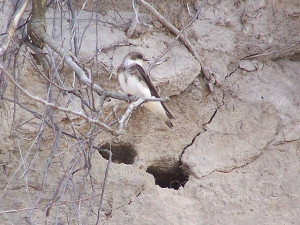
Cea mai mică specie de rândunică, lăstunul de mal, poate fi observată mai ales de-a lungul râurilor şi lacurilor mari. De obicei nu vedem numai un singur exemplar, este o pasăre sociabilă, umblă în stoluri. Coada este puţin bifurcată. Specia se poate identifica şi pe baza stilului de zbor: planează mai puţin, nu schimbă des altitudinea, nu zboară aşa de graţios şi cu uşurinţă ca rândunica sau lăstunul de casă. În afară de asta, rândunica are coada mult mai bifurcată, iar la lăstunul de casă se pot observa foarte uşor burta şi partea supracaudală albă. Ca şi celelalte specii de rândunici, lăstunul de mal coboară rar pe pământ, dar nici nu se înalţă prea sus în aer. Are un glas jos, dizarmonic şi strident “ciurr-ciurr”, iar cântecul e un ciripit încet.
Îl găsim mai ales lângă ape, pe lângă oferta abundentă de harnă aici găseşte pereţi verticali, locuri potrivite pentru săparea galeriilor. Nu e legat foarte mult de apropierea apelor, cuibăreşte aproape oriunde dacă găseşte pereţi verticali în cariere de margă şi nisip, în gropi de balastieră. În Dobrogea, în jurul ruinelor cetăţii Histria folosesc cu precădere peretele gropilor săpate de arheologi. Uneori aleg locuinţe ciudate, ca tuburile de drenaj ale malurilor betonate sau găurile pereţilor de stânci. Cea mai “înaltă” colonie a fost înregistrată în Himalaya, la o altitudine de 4.500 metri.
Cuibărește în colonii. Într-o colonie numărul galeriilor ocupate este de obicei în jur de 50, dar nu sunt rare nici coloniile cu peste o sută. Pe cel mai lung râu din Transilvania, Mureşul, pe o perioadă de 18 ani şi o lungime de 650 de km, numărul perechilor clocitoare a variat între 4.500 şi 11.000. De multe ori galeriile sunt ocupate de alţi chiriaşi: vrabia de casă şi de câmp, prigoria, pescărelul albastru, graurul, etc.
Este o specie migratoare, de lungă distanță. Sosesc ultimele dintre speciile de rândunici, la jumătatea lunii aprilie. Masculii încep să construiască noile galerii, în această fază fără ajutorul femelelor. Formarea perechilor se leagă strâns de săparea galeriilor. Să vedem, cum se petrec primele momente ale acestei “logodne”: după ce masculul sapă până la o adâncime de 25-30 cm, aşteaptă la intrare domnişoarele lăstun de mal. Dacă una zboară aproape, el se desprinde de perete şi face un cerc în faţa intrării cântând. Domnişoarele însă nu sunt uşor de convins, vizitează mai multe găuri înainte de a face această grea alegere. Dacă decid să rămână, ajută şi ele la săparea galeriei. Proaspăta “doamnă” apoi va alunga cu vehemenţă celelalte femele cu gânduri seducătoare, uneori chiar şi pe alesul său. Masculii care nu reuşesc să atragă o femelă vor începe să sape altă galerie, desigur pe o altă porţiune a coloniei. Din această cauză fiecare colonie are mai multe găuri decât numărul efectiv de perechilor cuibăritoare.
Când perechea tânără săpat până la o lungime de 60-70 de cm, face o cameră terminală cu diametru de 10-15 cm pentru viitorul cuib. Pământul este săpat cu ajutorul picioarelor şi al ciocului şi este scos afară ieşind cu spatele. Pentru asta le sunt de ajutor penele mai tari de la picioare, numite şi “pinteni de pene”.
Spre finele lucrărilor femela devine din ce în ce mai activă, masculul nu mai umblă după ea. Cu 3-5 zile înainte de depunerea ouălor masculul îşi păzeşte intens perechea, deoarece în această perioadă are loc împerecherea. Masculul nu se îndepărtează mai mult de un metru de femelă – în fiecare clipă poată să apară un rival neinvitat. După aceste zile obositoare, perechea înnoptează împreună în cuib.
Mai ales femela cloceşte cele 4-6 ouă, dar şi masculul preia o mare parte. De pe burta femelei cad penele, iar pielea formează riduri; circulaţia sângelui se intensifică pe acel loc formând aşa-zisa pată de clocire, devenind un adevărat “calorifer” pentru încălzirea ouălelor.
Puii golaşi, numai cu câteva pene, ies din ouă după două săptămâni. Cu ochii închişi, imediat cer de mâncare cu ciocurile larg deschise. Hrana este adusă de amândoi părinţii: muşte, ţânţari, afide, efemeroptere, etc. prinse în aer. Căutând hrană, adulţii nu se îndepărtează mult de colonie, şi de altfel nici nu pot, fiindcă puii trebuie hrăniţi din ce în ce mai des. De obicei aduc hrana de 4-5 ori într-o oră; mai frecvent pe vreme ploioasă.
Noua generaţie iese din galerie după cca 22 de zile, dar încă o săptămână puii sunt hrăniţi de părinţi. Puii dintr-o familie sunt recunoscuţi după sunetele emise. Juvenilii deveniţi independenţi părăsesc colonia, iar părinţii încep a doua clocire.
Uneori femela părăseşte încă din timpul creşterii puilor familia şi cu un alt mascul începe depunerea unei a doua ponte.
Dacă o pasăre răpitoare (şoimul rândunelelor, vânturelul roşu, uliul păsărar, uliul porumbar) se apropie de colonie, toate păsările din colonie se ridică în aer, emiţând sunete de alarmă. Pericolul poate veni şi dinspre sol, în chipul nevăstuicii, hermelinei, vulpii sau şobolanului sur.
Înainte de migraţie, lăstunii de mal se adună în stoluri mari şi înnoptează în stufărişuri. Păsările unei anumite zone de obicei rămân împreună şi în timpul migraţiei. Zboară ziua spre sud, noaptea se odihnesc (majoritatea păsărilor cântătoare insectivore zboară noaptea şi se hrănesc/odihnesc ziua). Efectivele din Europa petrec iarna în regiunea Sahel a Africii. Precipitaţiile acestei regiuni au o corelaţie strânsă cu supravieţuirea lăstunilor de mal: după un sezon secetos numai o mică parte din păsări se întorc la locurile natale. Mortalitatea este ridicată şi în condiţii normale, cu valori între 50-70 %, fiind mai puţin ridicată în rândul tinerilor. Dintre exemplarele inelate unul a atins vârsta de 9 ani.
Factori periclitanți, rol ecologic
Amenajările cursurilor de râu şi prezenţa oamenilor periclitează în multe locuri coloniile lăstunilor de mal. Să ocrotim deci habitatele, coloniile acestor păsări ca să le mai admirăm încă mult timp!
flickr.com/Zakwitnijpl-Ejdzej-Iric
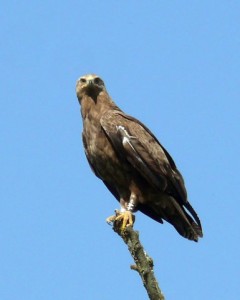
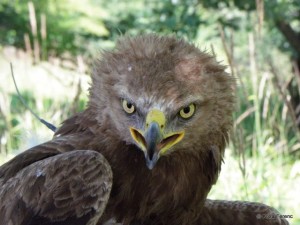
Acvilă ţipătoare mică (Aquila pomarina)
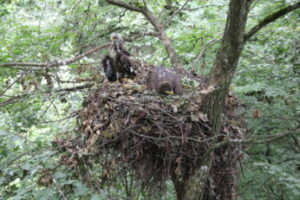
Acvila ţipătoare mică este o răpitoare răspândită în Europa. Una dintre cele mai mari efective se află la noi, fiind cea mai comună specie de acvilă din România. Preferă pădurile bătrâne, vecine cu păşuni sau fâneţe umede, dar vânează şi pe terenuri agricole, unde prinde mamifere mici şi broaşte. Evită culturile de rapiţă, floarea soarelui şi porumb. Cuibul este construit în păduri, situat la nivelul coronamentului, de obicei lângă trunchiul copacului. Cuibul construit din crengi este folosit mai mulţi ani la rând, în fiecare an este renovat, decorat cu crengi verzi. Cuibăreşte o singură dată pe an, femela depune 1 sau 2 ouă, dar întotdeauna numai un pui supravieţuieşte. Spre deosebire de multe alte specii, clocirea începe după depunerea primului ou, astfel puii nu eclozează în acelaşi timp. Puiul mai puternic îl omoară pe celălalt, fiind stimulat probabil şi de penajul alb al fratelui. Acest comportament poartă numele de cainism, după personajele biblice Cain şi Abel. Acvila ţipătoare mică este o specie migratoare, fiind prezentă la noi din martie până în septembrie. Teritoriul de iernare este în Africa Centrală şi de Sud.
Factori periclitanţi, rol ecologic: Efectivele acvilei ţipătoare mici sunt periclitate mai ales din cauza dispariţiei habitatelor de cuibărit şi de hrănire (pajişti transformate în terenuri agricole), al deranjului efectuat în timpul perioadei de cuibărit. Astfel, este important nu numai păstrarea pădurilor bătrâne, ci şi asigurarea unui mediu liniştit în timpul clocirii (ex. oprirea activităţilor de exploatare, de vânătoare). Foarte multe păsări mor în timpul migraţiei.
În 2012 a sosit ca voluntară la Grupul Milvus și a devenit membru al Grupului de Lucru pentru Conservarea Mamiferelor. Este interesată de interacțiunile între speciile sălbatice de animale și omul, de efectele acestora pe indivizi, populații și comunități, și implicația lor în conservare. Biolog absolvent al Universității din Frankfurt pe Main.
Membru al Grupului Milvus începând din anul 2005, totodată membru fondator al Grupului de Lucru pentru Conservarea Mamiferelor, având ca domeniu de interes cercetarea și conservarea mamiferelor mici și a carnivorelor mari. Voluntară într-o serie de activități a grupului, lucrează în proiecte cu scopul studiului populațiilor de mamifere (urs, lup, râs, vidră) pe raza siturilor Natura 2000, în vederea întocmirii planurilor de management.
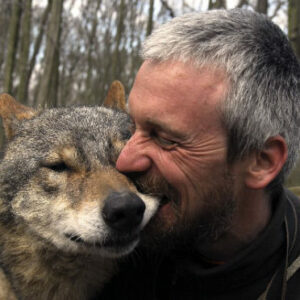
Membru al Asociației Grupul Milvus începând din 1994, participant în diverse programe organizate de asociație. Membru fondator și conducător al Grupului de Lucru pentru Conservarea Mamiferelor, biolog, având ca domeniul de interes principal studiul biologiei lupului si a ursului cu accent deosebit pe problemele privind interacțiunea lor cu omul.
E: zoltan.d.szabo@milvus.ro
Biolog, absolvent al Universității Babeș-Bolyai. A obținut titlul de doctor la Universitatea din Debrecen, cu o disertație despre comportamentul de dispersie al lăstunului de mal. Este membru al Grupului Milvus din 1993. A predat ecologie, ornitologie și practică de teren la Facultatea de Bilogie și Geologie UBB. A produs mai multe filme documentare de natură ca director de imagine și regizor. A inițiat și coordonat programul de Monitorizare Păsări Comune din România între 2006-2018. Inelator autorizat.
E-mail: anna.denes@milvus.ro
Tel: 0743-994.578
Am terminat ca biolog la Universitatea Babeş-Bolyai, acum fac studii de masterat tot aici la facultatea Ecologie terestră şi acvatică, unde studiez libelulele. Din copilărie am o pasiune faţă de natura şi mă ocup cu protecţia naturii în Rezervaţia naturală Cheile Vârghişului. Cu Grupul Milvus am întâlnit în anul 2016, de atunci am lucrat ca voluntar în multe programuri realizate de asociaţia. Mă bucur că pot să lucrez în echipa Milvus pentru păsări şi pentru protecţia naturii.
E-mail: lorinc.barbos@milvus.ro
Tel: 0723-201.344
Membru al Grupului Milvus începând din 2011. Biolog licențiat la Universitatea Babeș-Bolyai din Cluj-Napoca, momentan masterand al aceleiași universități. Este interesat mai ales în studierea și conservarea păsărilor răpitoare. În prezent este coordinatorul unui program național de monitorizare a speciilor nocturne. Inelator licențiat al Centralei Ornitologice Române pe răpitoare.
Momentan este angajat la Agenția pentru Protecția Mediului Satu Mare
E-mail: reka.kiss@milvus.ro
Membru Grupului Milvus din anul 2002. Unul dintre domeniile sale preferate de activitate este protecția păsărilor răpitoare(în special recensământul și monitorizarea acvilei de munte și a șoimului călător, observarea migrației păsărilor răpitoare) și educația în natură.
Ca ornitolog a participat în mai multe programe de recensământ și monitoring al altor specii de păsări.
Ca membru activ al Grupului de Lucru de Educație Ecologică, în cadrul mai multor programe organizează activități educative, excursii pentru copii. Din 2009 este inelator de păsări licențiat, astfel în cadrul unor excursii și tabere (tabăra Școala Naturii, tabără de inelare) inelează păsări cu scopuri educative și de monitorizare.
E-mail: zsolt.hegyeli@milvus.ro
Tel: 0735-878.518
Membru al Grupului Milvus începând din anul 2003, cu activități principale în cadrul Grupului de Lucru pentru Conservarea Mamiferelor. Principalele lui domenii de interes sunt biogeografia și conservarea mamiferelor stepice, și protecția păsărilor răpitoare diurne. Implicat în proiecte de cercetare și de conservare a mamiferelor, precum și în activități de conservare a păsărilor răpitoare. În același timp activează în domeniul implementării rețelei Natura 2000 în România.
E-mail: csaba.domokos@milvus.ro
Tel: 0720-538.422
Membru al Grupului Milvus începând din 2004. Biolog, cu un masterat în Management Cinegetic. În prezent doctorand la Școala Doctorală Roth Gyula în Științele Silviculturii și ale Managementului Cingetic, din cadrul Universității din Sopron (Ungaria). Interesat de conservarea, managementul și cercetarea carnivorelor mari, în special al ursului brun.
E-mail: judith.papp@milvus.ro
Membru al Grupului Milvus din anul 2000, activează în domeniul educației ecologice, servicii ecosistemice, fundraising. Începând din anul 2009 este responsabilă pentru organizarea Concursului Internațional de Fotografie de Natură Milvus.
E-mail: laura.turdean@milvus.ro
E absolventă de litere și profund fascinată de patrimoniul nostru cultural și natural. S-a implicat în mai multe mișcări și campanii de conștientizare de tipul grassroots, cum ar fi: Salvați Roșia Montană și împotriva exploatării gazelor de șist. Acum, la Milvus, comunică în scris și vizual despre natură și conservare, mărturisind că mereu visa să facă așa ceva.
E-mail: attila.dosa@milvus.ro
Tel: 0743-994.579
Fiind economist de profesie ornitologia a reprezentat numai un hobby pentru el, până când s-a alăturat echipei Milvus. De atunci participă la diferite proiecte de evaluare și de monitorizare de păsări.
Membru al Grupului Milvus începând din 1992. Absolvent al Facultății de Silvicultură (secția cinegetică) din Brașov. Desfășoară mai ales activități legate de studiul și conservarea păsărilor răpitoare și Strigiformelor, fiind implicat în majoritatea proiectelor de acest gen, iar pe unele le și coordonează. Lucrează mai ales cu specii ca Aquila pomarina, Falco vespertinus, Falco tinnunculus sau Buteo rufinus, fiind interesat și în Asio otus, Strix uralensis, S. aluco și Glaucidium passerinum. Vizitează cu regularitate multe dintre zonele umede din Câmpia de Vest, Transilvania dar și din Dobrogea. Nu ascunde nici faptul că îi place să observe și păsări rare, chiar dacă acestea se află în celălalt colț al țării. Este interesat de migrația păsărilor, mai ales a celor răpitoare, fiind și inelator licențiat încă din anul 1995. În cadrul Grupului Milvus coordonează datele despre regăsirea păsărilor inelate în străinătate. Este unul dintre administratorii bazei de date privind păsările rare din Bazinul Carpatic (www.rarebirds.hu).
E-mail: istvan.kovacs@milvus.ro
Tel: 0728-303.898
Biolog, cu masterat în ecologie terestră și acvatică. Inelator de păsări licențiat al Centralei Ornitologice Române. Principalul domeniu de activitate constă în coordonarea unor programe și proiecte de evaluare și monitorizare de păsări, de exemplu coordonează programele Monitorizarea efectivelor de iernare a păsărilor răpitoare, Atlasul păsărilor cuibăritoare din România, Monitorizarea păsărilor nocturne din habitate deschise și semideschise, Monitorizarea acvilei de munte în România și a coordonat mai multe evaluări locale. Este unul dintre responsabilii pentru dezvoltarea bazei de date OpenBirdMaps.
E-mail: iulia.vizi@milvus.ro
Din decembrie 2015, Iulia are grijă de comunicarea externă a asociației. A intrat în sfera nonguvernamentală după mai bine de 12 ani de jurnalism de televiziune și radio. Pasionată de lectură, excursii și animale , Iulia crede că doar prin comunicare se poate schimba micul univers în care trăim.
E-mail: gabor.bone@milvus.ro
Tel: 0722-533.815
Interesul meu față de natură și conservarea naturii m-a condus să învăț la Științele Mediului la început apoi am terminat masteratul le ecologie. Domeniul meu principal de interes este aplicarea studiilor de informatică în ecologie. Sunt membru al Grupului Milvus din 2012, unde în principal lucrez cu prelucrarea datelor și pe teren. Pe lângă acestea încerc să ajut și în alte activități ale Grupului.
E-mail: reka.szilagyi@milvus.ro
Membru al Grupului Milvus din 2020. A studiat informatică și protecția mediului în Cluj-Napoca. Se ocupă de programare, procesarea și vizualizarea datelor, și ajută la Centrul de Reabilitare a Animalelor Sălbatice.
E-mail: krisztina.havadtoi@milvus.ro
A absolvit Facultatea de Biologie a Universității Babeș-Bolyai din Cluj-Napoca în 2010, și de atunci se ocupă cu botanică, evaluări de vegetație și cartare de habitate. Colaborator al Grupului Milvus din 2019.
Membru al Grupului Milvus din 1994, biolog. Este interesată de activități și cursuri de agro-mediu, servicii ecosistemice, educație ecologică.
E: istvan.komaromi@milvus.ro
T: 0720-527.565
Membru al Grupului Milvus cu diplomă în biologie-geologie și geografia turismului. Este implicat în mai multe programe ale grupului ca: studiul și protecția păsărilor răpitoare, monitoringul diferitelor populații de păsări, studiul migrației, etc. Este interesat de conservarea și studiul păsărilor răpitoare.
Membru al Grupului Milvus din 2007. Și-a terminat studiile la Universitatea Babeș-Bolyai, la specializarea ecologie. Principalul său domeniul de interes este studiul micromamiferelor pe baza ingluviilor de răpitoare de noapte și analiza dietei răpitoarelor de zi. Participă activ în programe de educație ecologică.
E-mail: attila.marton@milvus.ro
Tel: 0725-533.086
Ornitolog, membru al Grupului Milvus din 2010. Și-a obținut masteratul în ecologie la Universitatea Babeș-Bolyai din Cluj-Napoca și în prezent este doctorand al Universității din Debrecen, cercetând coevoluția dintre cuc și lăcarul mare. Inelator din 2013, participă la activitățile de inelare ale grupului și coordonează activitatea de inelare de pe Grindul Chituc.
E-mail: robert.zeitz@milvus.ro
Tel: 0735-878.520
Membru fondator și angajat al asociației. Inelator licențiat al Centralei Ornitologice Române, ecolog licențiat la Universitatea Babeș-Bolyai din Cluj-Napoca. Este implicat în primul rând în activități legate de protecția păsărilor răpitoare, dar este activ și în multe alte acțiuniale Grupului, cum ar fi cele de studiu, conservare, sau monitorizarea populațiilor de păsări din țară. Este responsabil al Centrului de Reabilitare a Păsărilor Sălbatice.
E-mail: attila.nagy@milvus.ro
Tel: 0728-303.868
A devenit membru al Grupului Milvus în 2002. Coordonează diverse proiecte și activități implementate în partea de vest a țării. Conduce programul destinat conservării vânturelului de seară, desfășoară activități de conservare și cercetare legate de alte specii, precum dropia și dumbrăveanca. Este responsabilul celor două situri Natura 2000 din județul Bihor, ale căror custodie este asigurată de Grupul Milvus. În prezent este managerul unui proiect POS implementat pentru elaborarea planurilor de management pentru șapte situri Natura 2000. Este liderul filialei Grupului Milvus din Oradea.
Atlasul păsărilor cuibăritoare din România
Atlasul păsărilor cuibăritoare din România în 2017
Asociația „Grupul Milvus” și Societatea Ornitologică Română (BirdLife România) a lansat în primăvara anului trecut proiectul „Atlasul păsărilor cuibăritoare din România”. În decursul unui an am cules date sistematice cu metode specifice atlasului din 229 pătrate de 10×10 km cu participarea a 58 de observatori. În afara acestor date recente, am centralizat date vechi începând din anul 2006 din diferite surse, de la observatori voluntari, din proiecte de monitorizare sau din evaluări ample ale ariilor protejate. Mulțumim și pe această cale persoanelor și organizațiillor care au contribuit cu date!
Rezultatele sunt prezentate pe pagina web a proiectului, unde se poate consulta lista speciilor cuibăritoare în fiecare pătrat de 10×10 km din România: http://atlaspasari.ro/rezultate.
Cu toate că dispunem de date dintr-o parte semnificativă a țării, în majoritatea pătratelor numărul de specii a rămas foarte mic. Chiar și din pătratele aparent mai des vizitate lipsesc date certe referitoare la cuibăritul unor specii comune. Din aceste motive continuăm colectarea datelor și în 2017.
Despre program, în detaliu, puteți citi pe www.atlaspasari.ro sau pe pagina de Facebook a programului.
Monitorizarea Păsărilor Comune
Prezența și abundența speciilor de păsări comune sunt indicatori buni ai stării mediului care ne înconjoară, astfel monitorizarea schimbării în timp a distribuției și a efectivelor acestor specii are importanță majoră. Programul a fost lansat de Societatea Ornitologică Română, iar Asociația „Grupul Milvus” participă ca partener. În cadrul programului, voluntarii noștri efectuează observații anuale în apropierea localităților de reședință, iar în anumiți ani sunt completate un număr mai mare de pătrate în regiuni mai puțin acoperite din punct de vedere ornitologic.
Despre program, în detaliu, puteți citi pe http://monitoring.sor.ro/
Monitorizarea păsărilor răpitoare de zi cuibăritoare din România (MPR)
Program inițiat de Asociația „Grupul Milvus” are ca scop urmărirea pe termen lung a schimbărilor în efectivele și productivitatea speciilor de păsări răpitoare de zi cuibăritoare pe tot teritoriul țării. Aici este inclusă, datorită biologiei reproducerii, și barza neagră (Ciconia nigra) și corbul (Corvus corax). În principiu acest program se desfășoară pe bază de voluntariat.
Programul de monitorizare al păsărilor răpitoare din România este alcătuit din două scheme diferite și este menit să furnizeze o serie de date privind schimbările populaționale și de productivitate.
În dezvoltarea metodologiei au fost folosite scheme deja existente în România și în țările unde acestea au tradiție. Observațiile vor fi efectuate în pătrate de 10×10 km, iar în vederea menținerii continuității, voluntarii sunt rugați să aleagă pătrate pentru care există date din trecut.
Prima schemă, cea principală, este monitorizarea păsărilor răpitoare prin observații de pe puncte fixe. În cazul în care voluntarii nu au suficient timp liber pentru a implementa ambele scheme, această schemă poate fi efectuată și fără a doua.
A doua schemă va fi monitorizarea cuibăritului păsărilor răpitoare – barza neagră și corbul. Constă în căutarea și monitorizarea tuturor cuiburilor existente ale speciilor țintă, în una sau mai multe din pătratele de 2X2km2 din pătratul de 10X10 km2 ales.
Pentru mai multe informații privind programul, vizitați pagina www.milvus.ro/mpr, unde găsiți detalii privind harta pătratelor, puteți alege un eșantion și puteți descărca punctele de observații, limita pătratelor, formularele și metodologia.
Dacă doriți să participați la această monitorizare sau aveți întrebări legate de acest program vă rugăm să ne contactați pe adresele de mai: office@milvus.ro sau robert.zeitz@milvus.ro
Acvila de munte, aproximativ 90-150 perechi, este una dintre cele mai rare specii de pasări răpitoare cuibăritoare din România. Șoimul călător este o specie a cărei populație națională și europeană s-a prăbușit în anii ‘60-’70 până la un nivel apropiat extincției, iar efectivele au început să crească din nou abia la începutul anilor 2000. Unul dintre scopurile principale ale proiectului este monitorizarea efectivelor cuibăritoare ale acestor două specii legate de habitatele de stâncărie. Un alt scop este studierea în detaliu a ecologiei acvilei de munte. Astfel, monitorizăm anual succesul de cuibărire în două zone selectate (Munții Apuseni și o parte a Carpaților Orientali), inelăm puii, adunăm informații despre obiceiurile de hrănire și intenționăm să studiem folosința………………..
E: tibor.sos@milvus.ro
T: 0735-878.519
Biolog cu masterat în ecologie aplicată. Membru al grupului din anul 2003, interesat mai ales în biologia și conservarea amfibienilor și reptilelor (www.tiborsos.webs.com). Fondator al Grupului de Lucru pentru Protecția Amfibienilor și Reptilelor. Inițiator al Coaliției Trachemys Adoption (www.freewebs.com/trachemysadoption), coaliție ce are ca țel popularizarea problemei țestoaselor exotice abandonate în natură. Membru al grupului de lucru Natura 2000.
E: reka.komaromi@milvus.ro
T: 0725-226.174
Membru al Grupului Milvus din 2001. Și-a terminat studiile la Universitatea Babeș-Bolyai, la specializarea biologie-geologie și la Universitatea Corvinus din Budapesta, la specializarea horticultură. Lucrează în domeniul educației ecologice în cadrul Grupului de Lucru de Educație Ecologică precum și la Centrul de Reabilitare. Lângă aceste activități ea se mai ocupă și de rezolvarea problemelor administrative și financiare precum și de sarcinile de zi cu zi din birou.
În anul 2010 Asociația „Grupul Milvusˮ a început montarea primelor cuiburi artificiale pentru minuniță (Aegolius funereus) în M-ții Călimani. În cursul ultimilor ani am continuat această activitate amplasând alte zeci de cuiburi și în alte zone: M-ții Gurghiului, Depresiunea Giurgeului și M-ții Ciucului.
Scorburile artificiale sunt controlate cu regularitate în fiecare an pentru a afla rata de ocupare și succesul de cuibărit.
Membru al Grupului Milvus din 2005. Este interesat în protejarea speciilor de pești de apă dulce și de managementul ariilor protejate. Licențiat în ecologie în cadrul Universității Babeș-Bolyai din Cluj Napoca. În prezent studiează ecologia și conservarea speciilor de pești din sistemele de apă curgătoare din Transilvania, este doctorand la Facultatea de Biologie și Geologie în cadrul Universității Babeș-Bolyai.
Email: tamas.papp@milvus.ro
Tel: 0720-530.117
Unul dintre membrii fondatori și președintele organizației. Biolog, licențiat al Universității Babeș-Bolyai, inelator de păsări. Coordonează activitățile Grupului Milvus, astfel degeaba îi place munca de teren, majoritatea timpului își petrece în birou. Îi plac temele care au impact major asupra naturii, astfel se ocupă cu drag de probleme nepopulare ca ceea a electrocutării păsărilor sau de măsurile de agro-mediu. Reprezintă politica de conservare a biodiversității a asociației pe forumuri naționale sau internaționale. Membru al Consiliului Reprezentativ al Coaliției ONG Natura 2000 România.








 În anul 2010 Asociația „Grupul Milvusˮ a început montarea primelor cuiburi artificiale pentru minuniță (Aegolius funereus) în M-ții Călimani. În cursul ultimilor ani am continuat această activitate amplasând alte zeci de cuiburi și în alte zone: M-ții Gurghiului, Depresiunea Giurgeului și M-ții Ciucului.
Scorburile artificiale sunt controlate cu regularitate în fiecare an pentru a afla rata de ocupare și succesul de cuibărit.
În anul 2010 Asociația „Grupul Milvusˮ a început montarea primelor cuiburi artificiale pentru minuniță (Aegolius funereus) în M-ții Călimani. În cursul ultimilor ani am continuat această activitate amplasând alte zeci de cuiburi și în alte zone: M-ții Gurghiului, Depresiunea Giurgeului și M-ții Ciucului.
Scorburile artificiale sunt controlate cu regularitate în fiecare an pentru a afla rata de ocupare și succesul de cuibărit. 
It is good to know that some people on this planet go forward to ward better protection of the environment and wildlife. While Europeans are far advanced in their efforts, states and provinces in North America only pursue profit-orientated actions. For instance, environmental agencies constantly alter eco-systems to maintain economic sustainability. Read more at:
http://sites.google.com/site/stopkilling4profit